
News – Sheridan Media
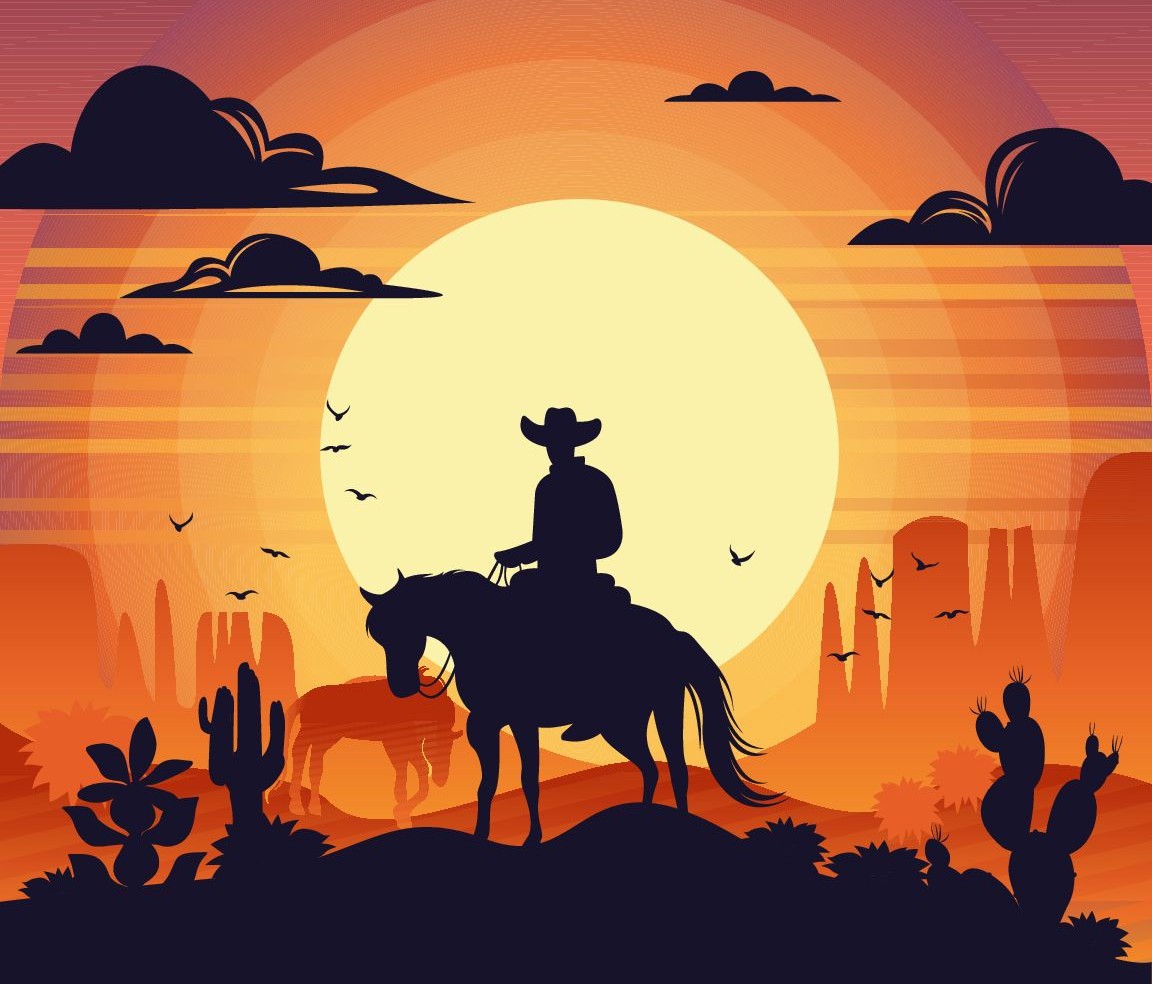
Cowboys and songs seem to go together. In fact, in the 30s and 40s, the ‘Singing Cowboy’ movies were popular throughout the country.
In reality, the ‘night riders’ sang to quiet the cattle on the long trail drives, and around the campfire in the evening. It is doubtful they carried guitars in the chuck wagon, as is often portrayed in movies, but maybe in the bunkhouse someone might strum a guitar or a banjo.
On the trail it was more likely it was just their voices or maybe a small mouth harp, which could be slid into the breast pocket of a shirt when riding.
Cowboy songs, like sea-chanties, reflect the rhythm of the range. One can almost hear the creak of saddle leather, see the stars in the night sky, where there is no other light, or hear the crack of a six gun.
Although the singing cowboy movies fell out of favor, in the 1950s, 60s and into the 70s, county music singers like Marty Robbins had several chart hits with songs like El Paso, Big Iron, The Hanging Tree, and others. Sons of the Pioneers came out with several cowboy songs, and Ken Curtis, Festus of the Gunsmoke T.V. series, was the lead singer for a time.
Songs were written about outlaws, such as Jesse James and Billy the Kid, and lawmen, Wyatt Earp and The Texas Rangers.
Johnny Horton sang about Comanche, The Brave Horse, who survived the Custer Fight and Jim Bridger, the famous mountain man.
We may not have these old cowboy songs today had not one professor collecting them and saving them for future generations in 1909.
Wyoming Tribune (Cheyenne), March 15, 1909 – Know Any Cowboy Songs? Pro. John A, Lomax of College Station, Texas, Is Endeavoring to Preserve History of West As Recorded In Frontier Songs, and Asks for Specimens of All Sorts The Tribune is in receipt of a communication from John A. Lomax professor of English at the Agricultural and Mechanical College of Texas, at College Station, in which the writer makes a most interesting inquiry. it appears that he is endeavoring to make a complete collection of the native songs and ballads of the west, particularly those known as cowboy songs, As he expresses it, he is at attempting to preserve the history of the West as it has been recorded in frontier songs.
These deal mainly with the deeds of desperadoes, the life of the ranger in pursuit of Indians or desperadoes; the experiences of the cowboys going upon the trail; trials of the forty-niners; buffalo hunters, stage drivers and freighters, have repeatedly been preserved in the crude and vulgar songs and poems of the frontier, and have never been printed but have been transmitted by word of mouth from generation to generation.
Such attempts are efforts as Prof. Lomax epitomize and particularize the life of the pioneers who peopled the vast region west of the Mississippi.
Believing such pioneer ballads do exist, Prof. Lomax is anxious to secure all available copies and expects to publish the same in book form. He is not adverse to any, no matter if they be crude, and incomplete will be equally interesting and useful for his purpose.
One song, which pertains especially to Cheyenne, he says which is very incomplete but which he is especially desirous of completing.
He hopes that some reader of the Tribune may know the rest of the ballad, and any such is requested to sent the same to the Tribune office and it will be at once forwarded to Prof. Lomax.
Lomax included in his request the lyrics that he had, and the song is “The Dreary Black Hills,” which does mention, ‘that city Cheyenne.’ In the song, the writer comes west, searching for gold in ‘The Dreary Black Hills’. He found no gold and wished he had stayed at home and worked selling patent medicine.
The interesting thing about that song, is that it puts Cheyenne, Wyoming, in the Black Hills. Today, what we call the Black Hills are about 150 miles to the north of Cheyenne. Research reveals, however, that the range of mountains near Laramie, including Laramie Peak, were once known as the ‘Black Hills’ obviously the range of mountains that were referenced in the song. Mark Twain makes reference to going through the Black Hills and seeing Laramie Peak in his 1872 classic, ‘Roughing It,’ about his western travels.
Later, Lomax’ book was published and available in the Laramie Library. The book has been reprinted and is still available today.
This from The Laramie Republican, March 31, 1916 – Ballads of the Plains Book by Professor in University of Texas of Interest to Cowboys Here. Songs that will Appeal Strongly to Men in Wyoming and over Entire Western Country who have listened to Them and Sung Themselves While on the Plains.
Among the newer books at the Carnegie Public Library is a small volume entitled “Cowboy Songs and Other Frontier Ballads.” It Is a collection made recently by Prof. John A. Lomax of the University of Texas and Sheldon Fellow of Harvard University.
The article states that Prof. Lomax said the songs were jotted down on a table in the rear of a saloon or scrawled on an envelope while the writer was sitting about a campfire or caught behind the chutes of a bronco-busting contest.

The article continues…It is a work which will appeal strongly to the many men in Wyoming and over the entire western country who have listened to and sung those very same ballads in the past days of the cattle-range while sitting about the campfires or while watching a trail-herd of “dogies”at night; never realizing that they were assisting in the formation of essentially a folk-literature, similar, in many respects, to that of the Icelandic sagas, Anglo-Saxon ballads or Finnish myths.
Prof. Lomax is doing, as Colonel Theodore Roosevelt says in his introduction, an emphatically worthwhile work, “not only as of great interest to the student of literature, but to the student of the general history of the west.“
Remembered in this State – While the ballads were collected for the most part in Texas, the greater number of them will be well remembered by old Wyoming cowpunchers, for they were carried all over the west, and Wyoming itself must have played an important part in their creation.
They cannot be ascribed to any particular author or locality, but are of the spontaneous growth, the result of collective approval, as were the more ancient folk-songs. A few of the titles of the ballads will show the character of the collection: “The Dying Cowboy.” “The Cowboy’s Dream.” “Joe Bowers,” “The Cowboy’s Life,” “Jesse James,” “Texas Rangers,” “The Old Chisholm Trail,””The Bull Whacker.””Whoopee Ti Yi Yo, Get Along Little Dogies,” “The Horse Wrangler,” “The Dreary Black Hills,” “Hell in Texas,” “Root Hog or Die.” and “The Cowboys Meditation.”
One of Best Missing – One of the best of such ballads, a song which was very popular in Wyoming cow-camps in the late ’80’s, does not appear to have presented itself to Professor Lomax. It was called “Across the Great Divide.” Any old cowboy who remembers the ballad would probably find Prof. Lomax very pleased to hear of it
Today, thanks in part to Professor Lomax’s efforts, the songs were not lost. A few singers still record the traditional cowboy songs, and cowboy poetry gatherings are held throughout the country, keeping the cowboy tradition alive even now.

More Like this



Last modified: November 3, 2025