
News – Sheridan Media

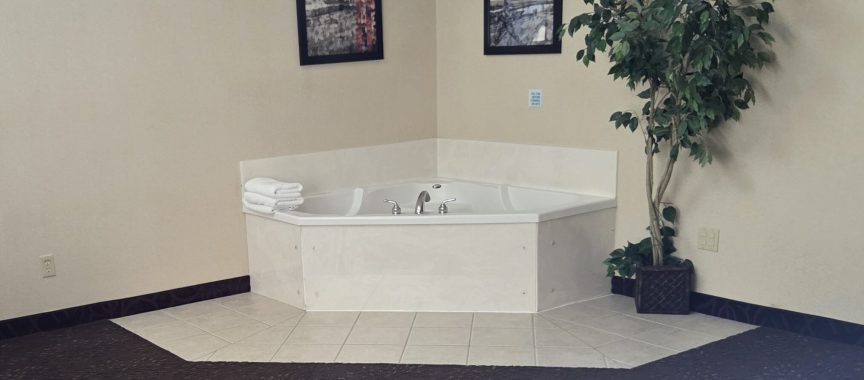
Today, many people have personal hot tubs in the homes, and many motels offer rooms complete with hot tubs, or have hot tubs next to their swimming pools. But, in the early days, hot tubs were not as common as they are today. Enter Turkish Baths. As early as 1912 in Sheridan, and 1908 in Cheyenne, Turkish Bath Houses were open for people to enjoy the benefits of soaking in warm water.
The Sheridan Post, November 29, 1912 – New Bath House – Sheridan Bath Parlor Opened In Basement of Kutcher Building — Massage and Baths. J. E. Mapes, formerly of Thermoplis and Hunter’s Hot Springs, yesterday opened a Turkish bath and massage parlor In the basement of the Kutcher building, Works and Main streets. Mapes is a graduate of the Chicago Physical Culture “Healthatorium” or institute, and has been engaged in massage work at Thermopolis, Hunter’s Hot Springs and else where for the past three years. Thermopolis he became acquainted with a number of Sheridan people and it was largely at their suggestion that he decided to open a local establishment.

Mr. Mapes states that while at present he has no facilities for giving mineral baths, arrangements may be made later to ship in quantities of the Thermopolis or Hunter’s Hot Springs waters. The establishment, to be known as the Sheridan Bath Parlors has been equipped in the most approved fashion, with tubs, showers, a sweat box, massage parlor, etc., and will doubtless be well patronized. An Invitation is extended to the public to visit and inspect the establishment, which under the terms of the lease will be run as a strictly first-class institution.
Cheyenne had a Turkish bath before Sheridan did, in 1908. This in the Cheyenne Daily Leader, February 12. – Turkish Bath Opens Today – Cheyenne is putting on more metropolitan airs for our city is now equipped with as good a Turkish bath house as can be found in the west. For several weeks a large force of men has been busy making over the basement of the Metropolitan hotel with such remarkable success that a most pleasing spectacle is presented there.
No expense has been spared to make this a first-class and complete bath house in every respect. The rooms have been fitted with every convenience. They are handsomely furnished with brass fixtures and heavy curtains, and pretty rugs. The wallpaper decorations and frescoes are in harmony with the furniture. The main office forms part of the cooling room, where dozen cots are curtained off. This room opens into the steam and shampoo rooms on one side and the barber shop and four private rooms on the other.
The sweating room opens off from the shampoo room. This can be heated by a dry process to a temperature of 13O degrees. These rooms are equipped with the best and most, up-to-date apparatus, much of the fixtures being in solid marble. The proprietor, W.L. Morris, is an experienced Turkish bath man, and he takes pride in his new establishment. A competent force of assistants have been employed to wait on the customers. A charge of $l.00 will be made for Turkish Bath and bed for the night. A barber shop will be opened In connection and clothes will be cleaned while patrons are in the bath The bath house is now complete and it is open today
Gentlemen are invited to call at any time and inspect the rooms. Friday will be ladies’ day, when the women are invited to call and inspect the rooms between the hours of 9a.m. and 7 p.m. after which the baths will be open to gentlemen.

Cheyenne Daily Leader, May 21, 1908
Sheridan residents were not the only ones who enjoyed the Turkish Bath. Although not exactly the same, the Crow Indians had a similar custom. Today the are more often referred to as ‘sweat lodges’. However, it sounds as if the entire event was a surprise to Assistant District Attorney C. S. Ford, who witnessed it.

The Daily Enterprise, May 9, 1910 – The “Altogether” in Little Big Horn Taken By Indian Maidens Who Love The Turkish Bath. Remain In Water For Hours. An Old Custom of the Crows Carried Out in All Sorts of Weather. – A strange sight was witnessed last week on the Crow reservation by Assistant District Attorney C. S. Ford, while at the agency to represent the government In the preliminary hearing of two Indians, said the Helena Record.
Happening to wander down to the Little Big Horn, not far from the agency, he observed a cluster of willow tepees, covered with blankets. Grunts and groanings proceeded from within. Suddenly the blankets over the entrance were thrown back, and from one tepee out rushed six Indian women, nude. The perspiration rolled from them in “purling streams” to use Mr. Ford’s enigmatic expression.
The Indians headed directly for the bank of the Little Big Horn, but they didn’t stop. There was a glint of bronze in the air, followed by a flop and a loud splash, as six Crow Indians dived into the waters of the Big Horn. They wallowed and swam about like sportive porpoises in the chilling waters, not seeming to mind a bit the 30-degree temperature.
Inquiry revealed that from time immemorial it has been the custom among the Crows to take a Turkish bath in the spring, following it with an immersion in the running stream. They do this for the same reason that many whites take sarsaparilla.
The Turkish bath houses of the Crows are constructed with especial care. Long willow withes are closely woven together into the shape of a tepee. Then blankets and skins are drawn over this framework. It is a simple matter to generate the steam.
Large round boulders are laid out on the ground, and a roaring fire built over them. When they have been thoroughly heated they are carried into the bath-tepee. The patient goes in and takes several pails of water. The entrance carefully closed, and water is poured on the heated stones, generating steam. Some of the Indians remain in these Turkish baths for three and four hours and then spend an hour or more in the cold stream. Big Medicine, chief of police on the reservation, is a firm believer in the efficacy of these baths for all bodily ills, and he regularly takes them three times a week.
Of course, if you have a Turkish Bath, you need Turkish Bath Towels. Stores were quick to jump on board.


The Sheridan Enterprise, November 20, 1914
Sheridan has seen many changes over the years, and at one time a Turkish Bath Parlor was considered to be sign that the town was growing and becoming more metropolitan. It was a way to help bring people into the community.

More Like this



Last modified: November 24, 2025