
News – Sheridan Media
[[{“value”:”
A combination of leather carving and Baroque music might seem an unusual pairing but the program at the Brinton, Echoes of Ornamentation: Wyoming Baroque & Jim Jackson on May 13 drew a large crowd.
Inspired by the exhibition James F. Jackson: Legacy in Art and Leather, the program brought together Wyoming artist Jim Jackson and Dr. Mark Elliot Bergman, Music Director of Wyoming Baroque, for a multidisciplinary conversation examining how ornamentation functions as both structure and expression.
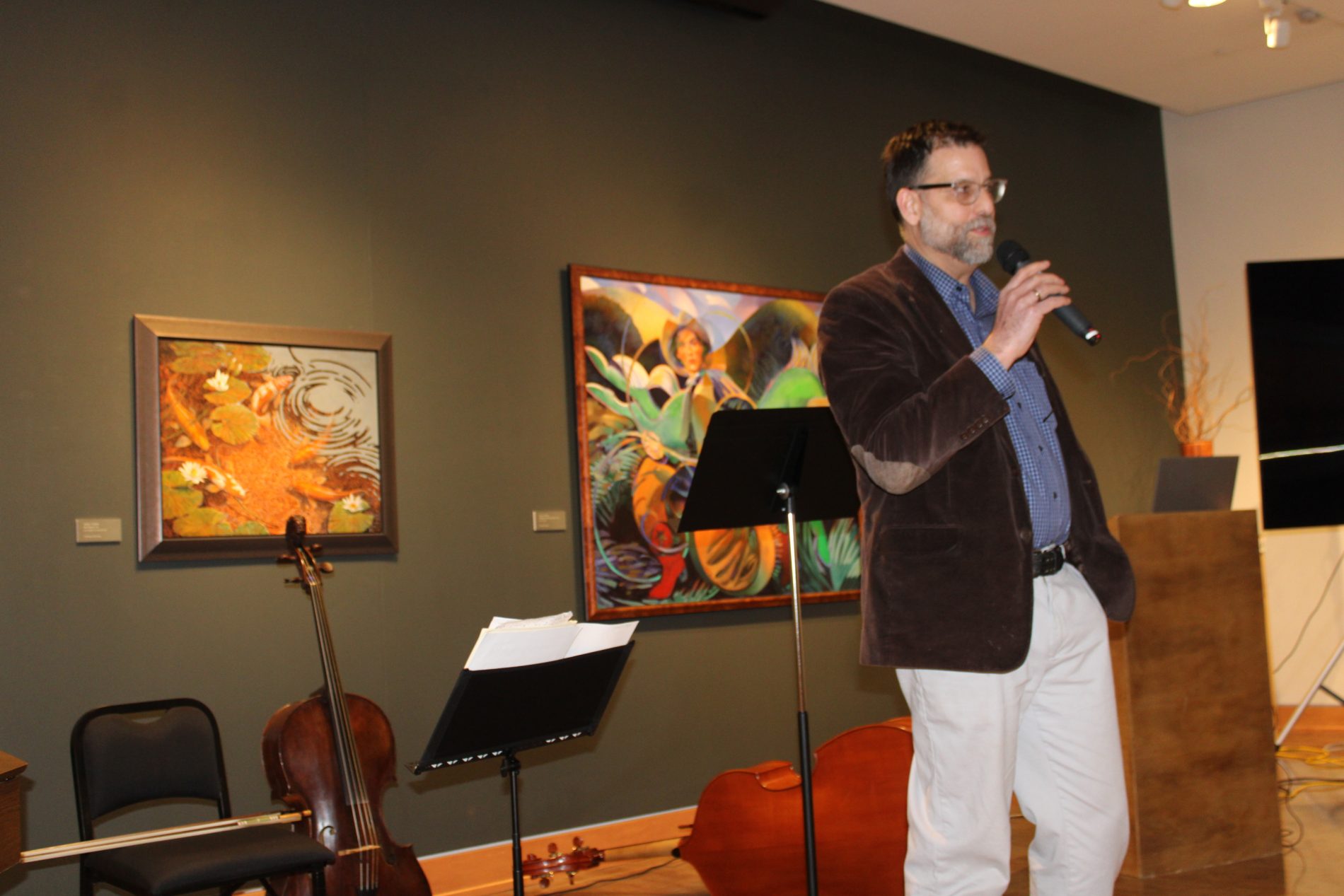
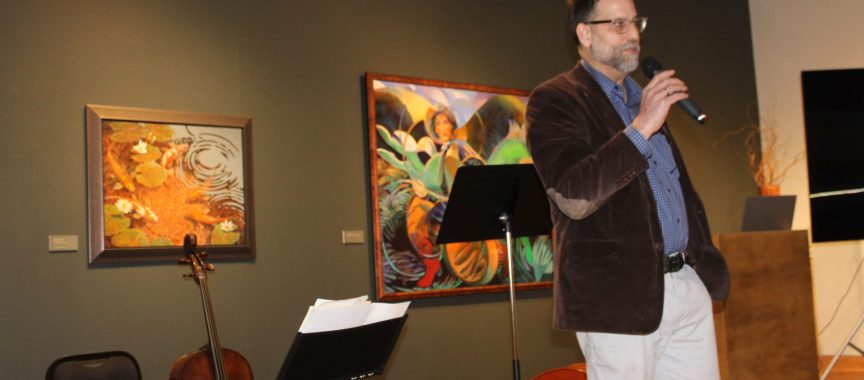
When asked how the program came about, Bergman said,
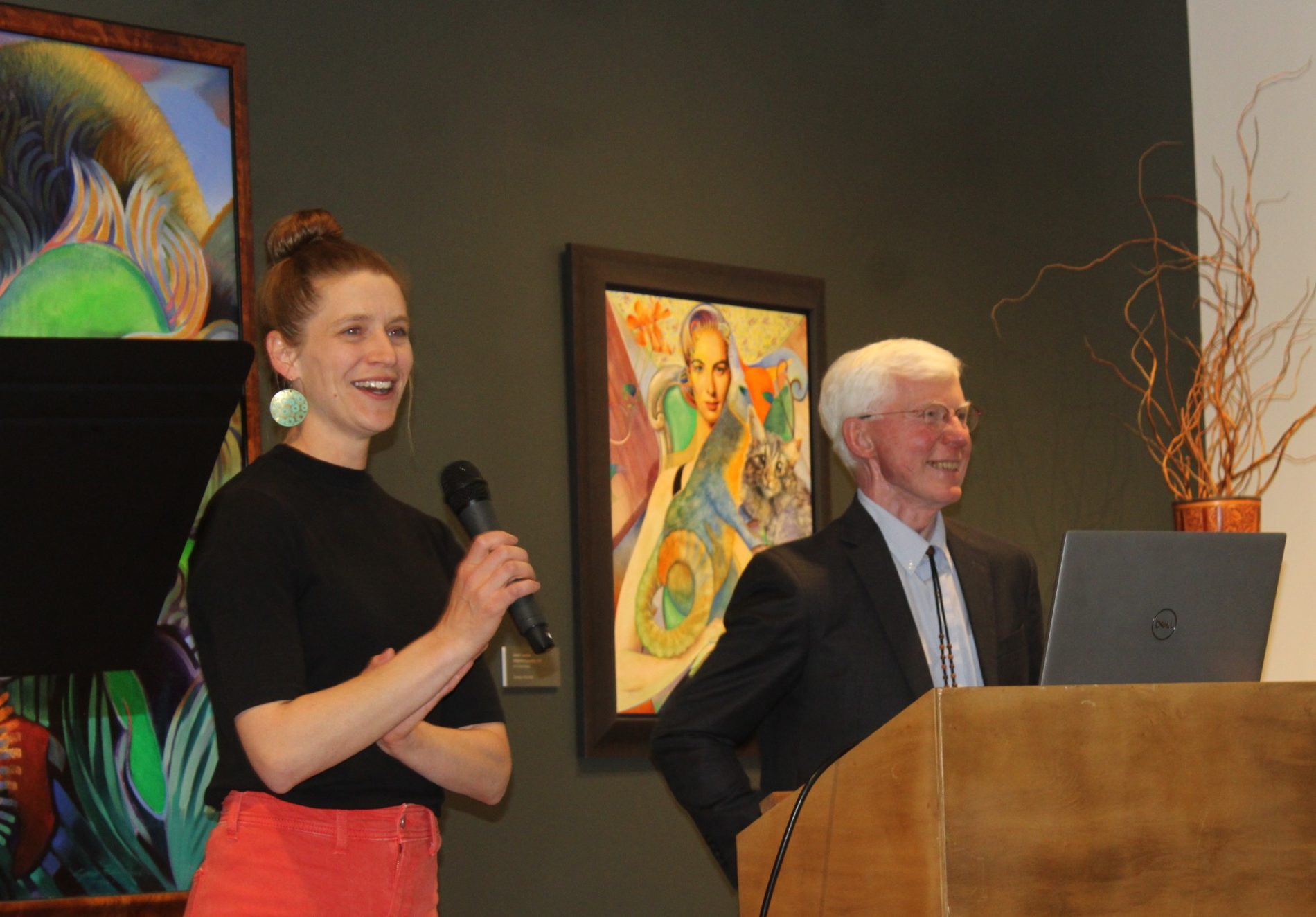
Kendra Heimbuck, Executive Director at the Brinton Museum thanked the Wyoming Culture Trust Fund for funding for the program.
Jackson welcomed the crowd, saying he saw several people he knew as well as several new faces. He also invited attendees down to his leather shop on the Brinton grounds, where he does much of his leather work.
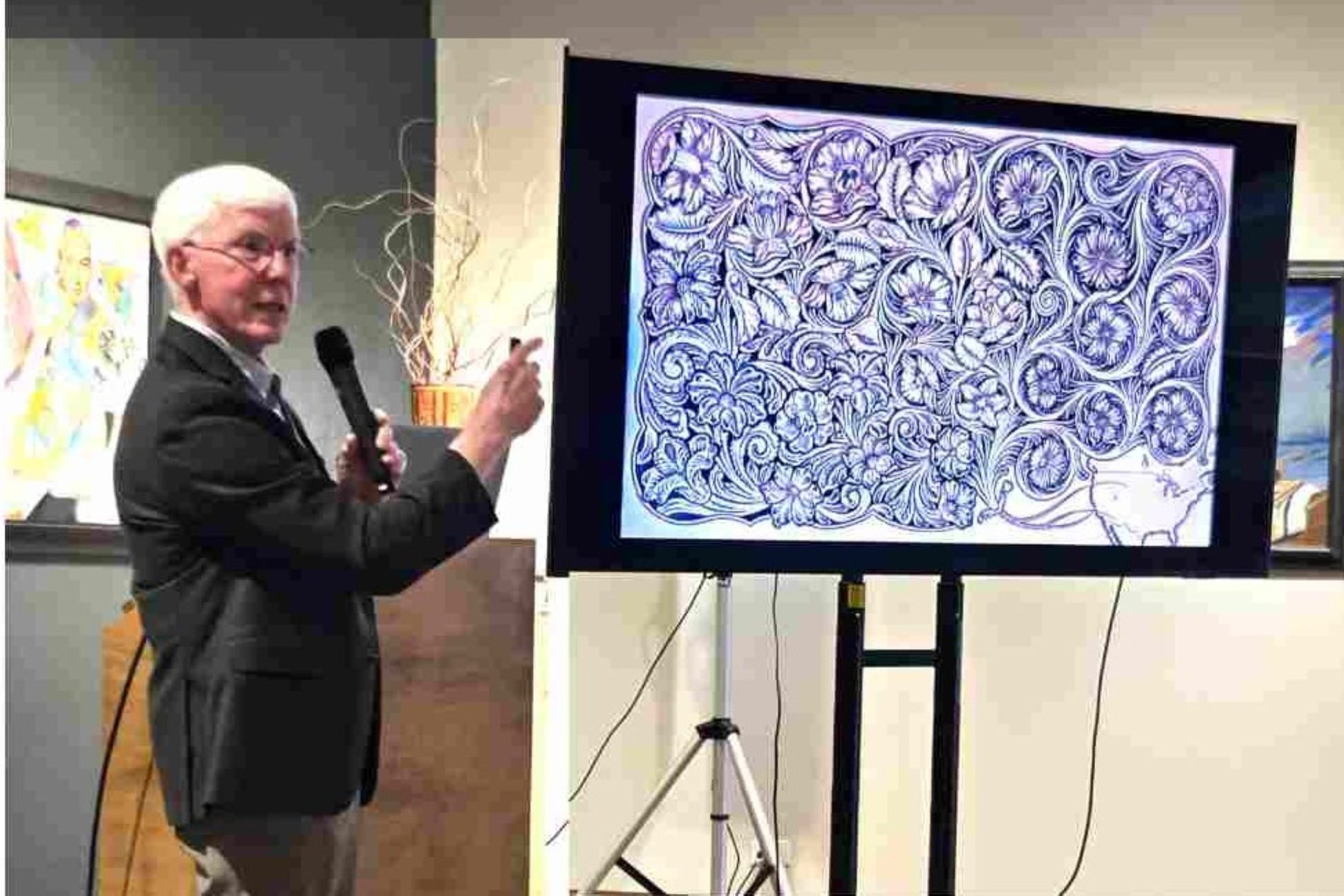
Jackson talked about his lifelong engagement with leather tooling, design, and ornamentation, accompanied by projected images of selected works.
He talked about the different styles of leather carving and how it came about. He said one style, the porter style, developed in Arizona, and it came about because the cowboys couldn’t afford a leather craftsman to carve several small flowers, but they could pay for a few larger flowers to decorate their saddles. Over the years, it developed its own style.
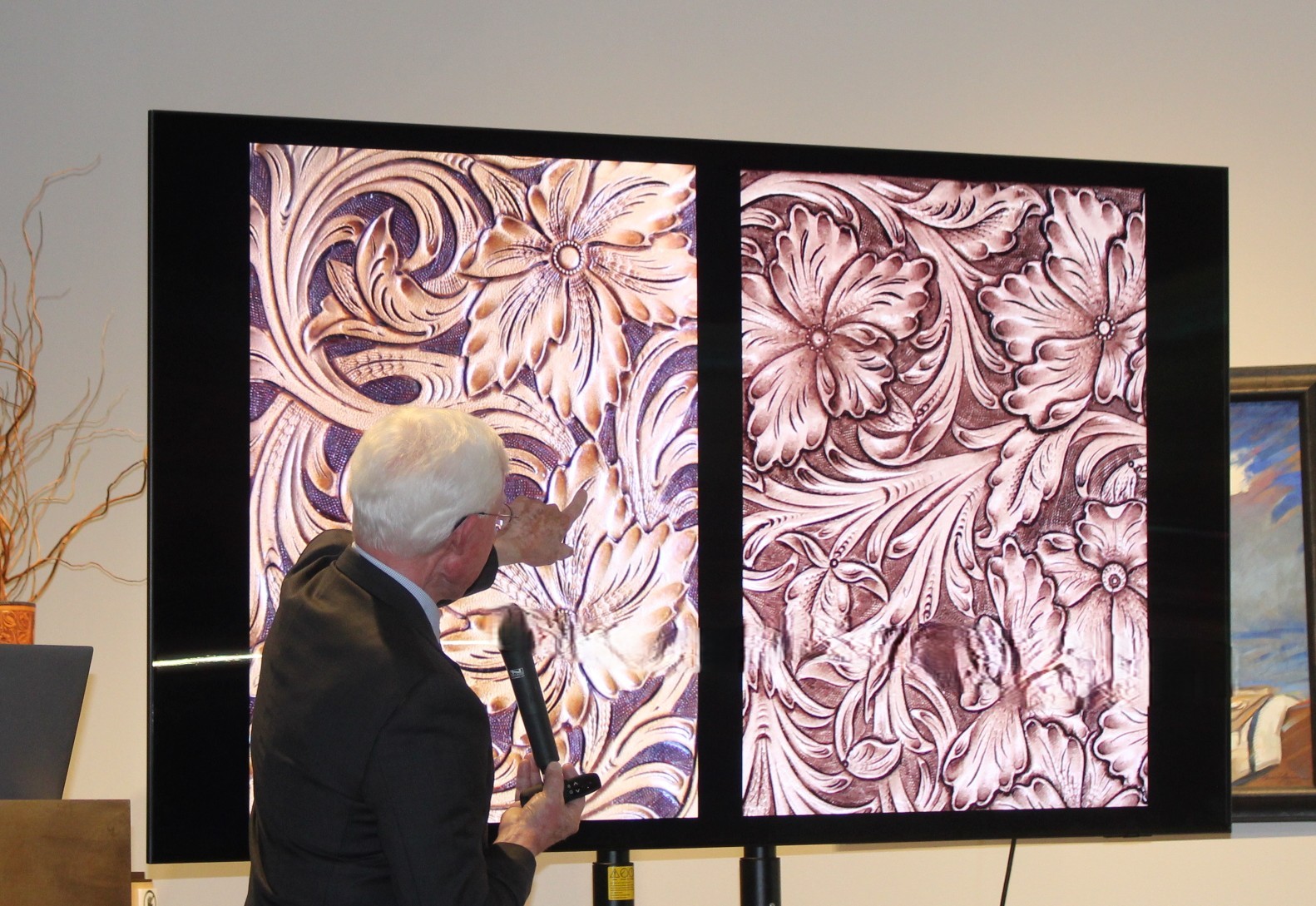
The various styles of leather tooling worked their way into Sheridan with the Texas cattle drives as well. Don King, saddle maker and leather carver, incorporated the Visalia carving and the Porter style. He said that there is a style of leather carving called the Sheridan Style of carving.
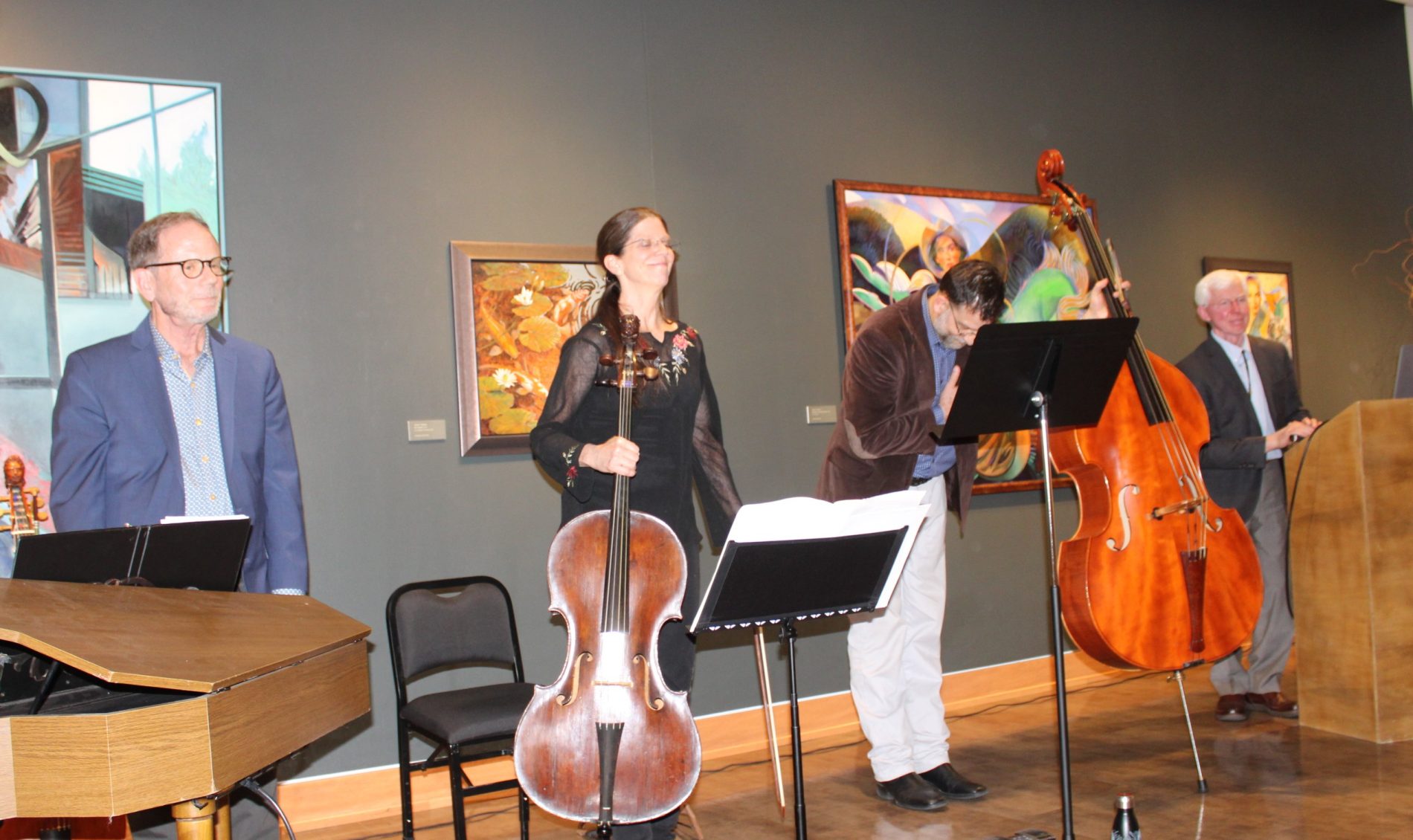
He gave a warm welcome to Mark Elliot Bergman and the Wyoming Baroque Ensemble and added about ornamentation in visual arts as well as in music. Bergman added,
Dr. Bergman offered insight into ornamentation within the Baroque musical tradition, exploring how embellishment shapes both the structure and emotional character of early music.
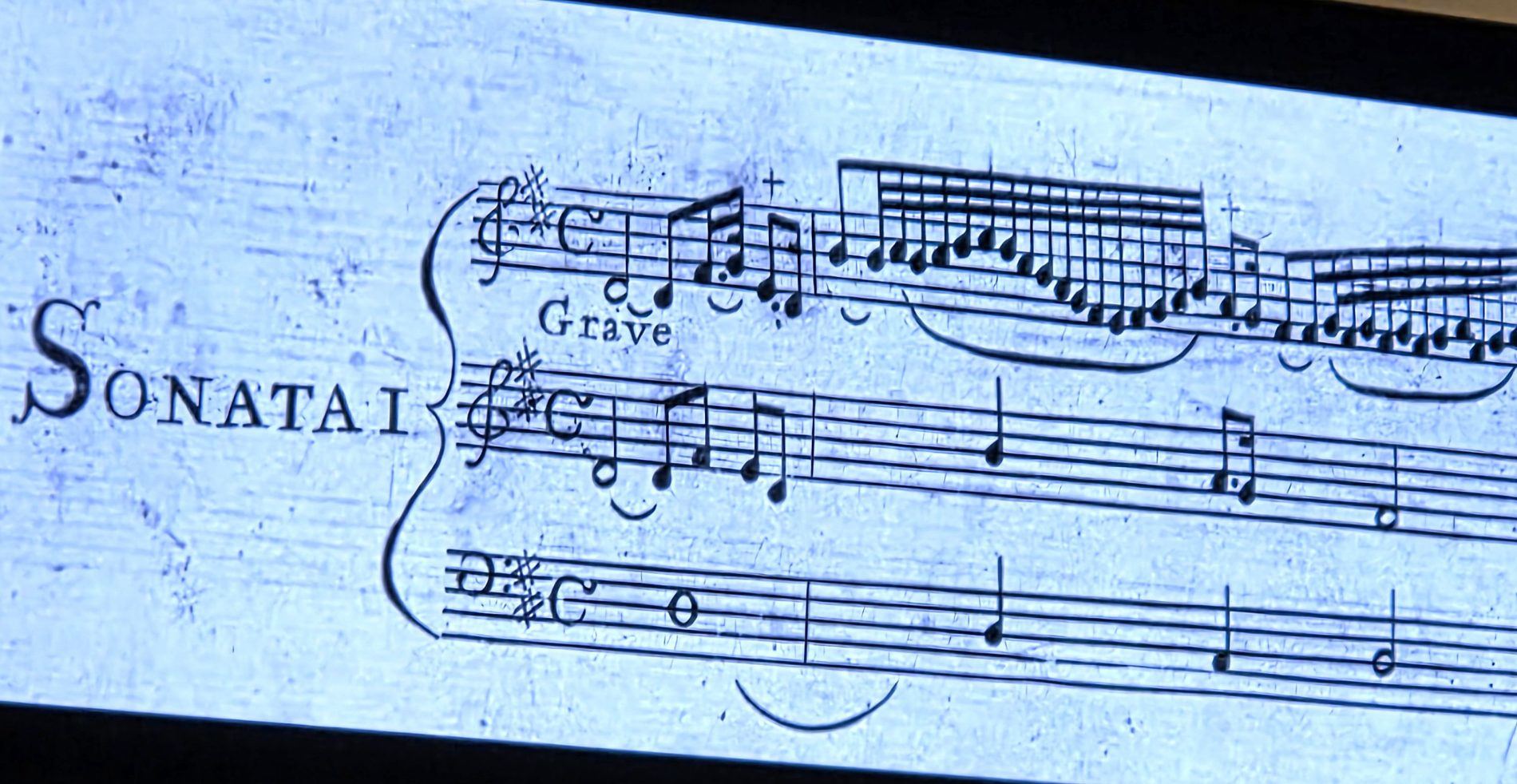
One photo he shared showed a piece of music, and there were notations on the score which had a code that told the musician which embellishment to use for the music. “No two performers would embellish the same score in the same way.
He said there are two styles of Baroque, Italian style and the French style. They were so different they were considered to be irreconcilable, but one composer did combine the two styles.
Beth Venderborgh, who played the Baroque Cello and Viola de Gamba, explained what Baroque music is.
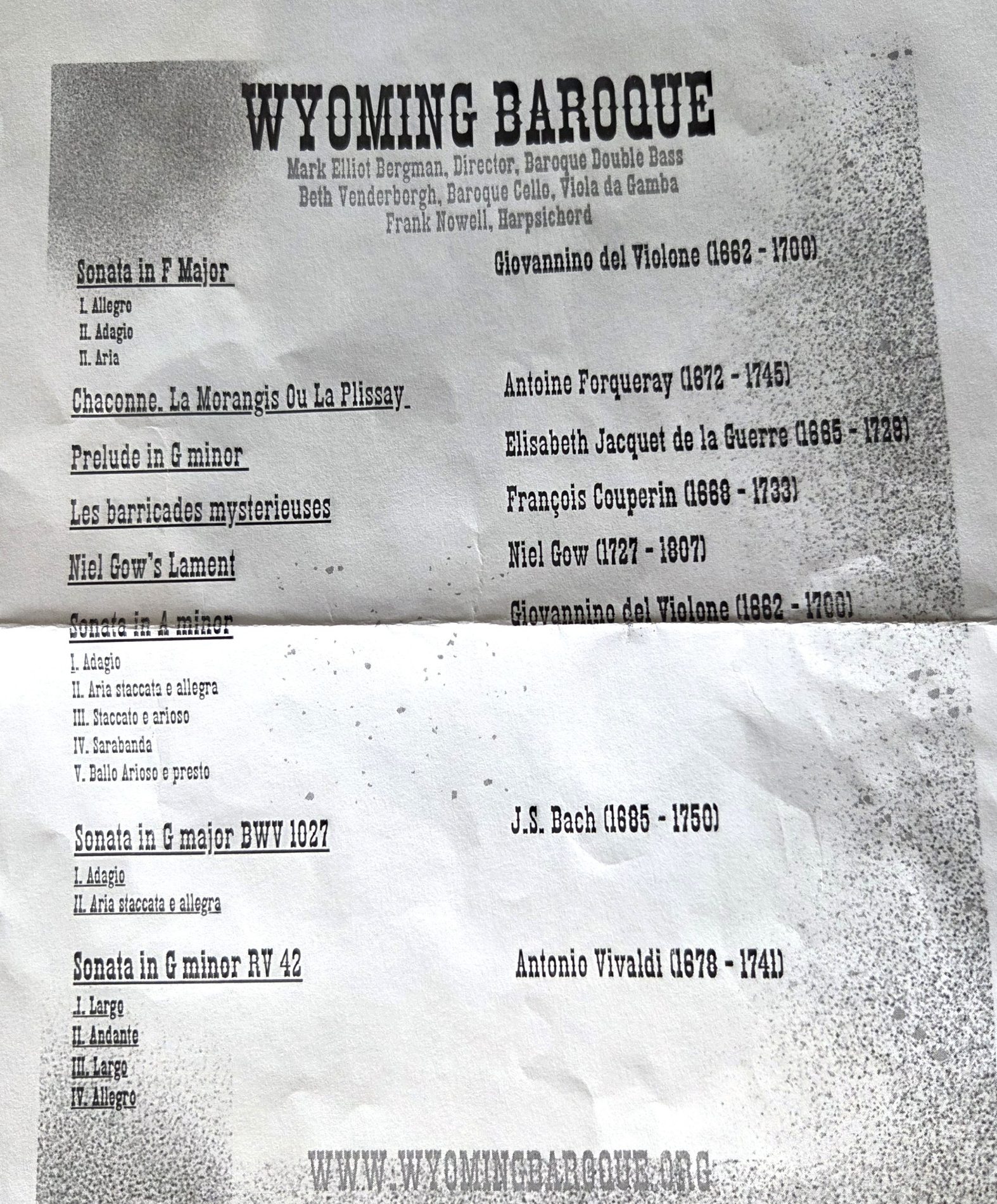
The evening culminated with a live performance by the Wyoming Baroque ensemble, consisting of Beth Venderborgh, Director Mark Elliot Bergman, who played Baroque double bass, and Frank Nowell, playing the Harpsichord.
Nowell played two solo pieces on the harpsichord, and said it was the main keyboard instrument of the time period, as the piano had not been invented yet, and when it was it took it awhile to catch on.
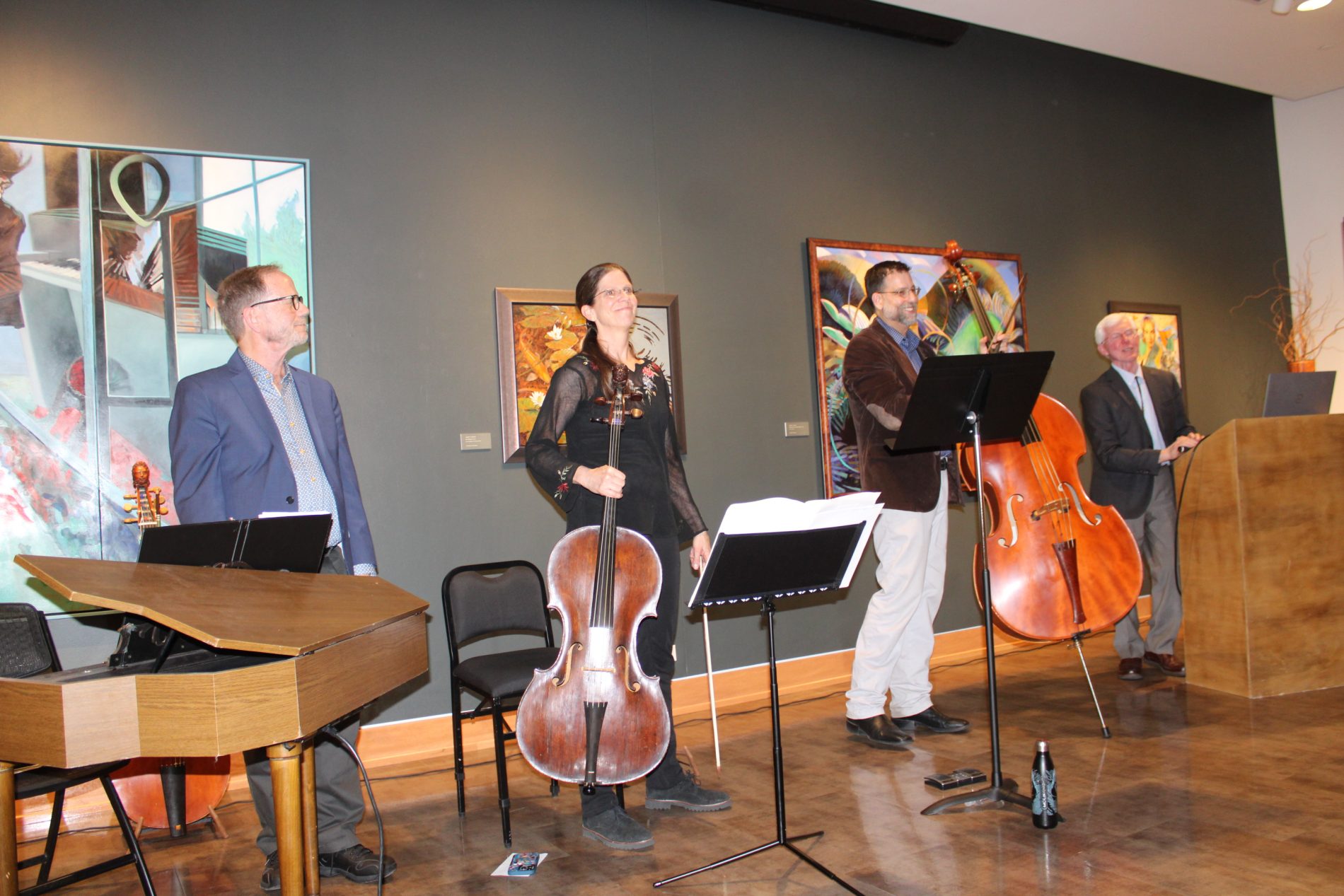
The performance created a dialogue between visual and musical traditions and highlighting shared principles of pattern, rhythm, and expressive detail. Bergam talked about the Scottish style.
He said that this was a fiddle piece, and little more difficult to play on the double bass.
While the ‘Lament’ was rather melancholy, it is a lament, after all, some, like this one, featuring Beth Venderborgh, were very upbeat.
Echoes of Ornamentation is presented as part of The Brinton Museum’s 2026 season and complements the exhibition James F .Jackson: Legacy in Art and Leather, currently on view.
“}]]

More Like this




Last modified: May 18, 2026