
News – Sheridan Media
[[{“value”:”
Today, with interstates and good paved roads in Wyoming, we sometimes don’t realize how difficult travel was in the early days. For one thing, today, there are many small towns with convenience stores, as well as modern rest areas along the interstates and some of the secondary highways as well. These provide a place to use a restroom, refill water bottles, and stroll around the grassy lawns for a break from travel.
During the last 1800s and even into the early 1900s, there were stage stations that served the same function for stagecoach passengers. Stage stops offered a brief respite from travel, with some being short stops to change teams, lunch stops, or overnights.
On the Overland Stage Road, there were stations every 10 to 20 miles, depending on the terrain. There were quick stops, where the hostlers just switched out the tired horses for fresh ones, which didn’t take long. There would be a lunch stop, where the passengers could wash some of the travel dust off, and eat a quick meal before returning to the stage. On long stage trips, there were overnight stops, where passengers were served supper, given a bed, and then fed breakfast the next day.
The old rock Huson house not far from Clearmont was once a stage stop on the Huson-Suggs stage route.

These two stories were in the Northern Wyoming Stinger, Huson, Wyoming September 23, 1892 –The six-horse team attached to the Suggs-Huson stage, became manageable and made three attempts to get away. The pluck of the driver along saved the stage from being completely demolished. Superintendent McCollough was the only passenger aboard.
Powder River, Wyo., Sept. 7.—This ranch is the one designated by the Cheyenne Sun as “Kid Donnelly’s famous rendezvous for thieves.” It is at the e mouth of Dry Fork of Powder River just opposite old Cantonment McKinney and has been and has been stopping place for years. Mrs. Donnelly is running the ranch now and she has her bands full cooking for the stage drivers and travelers, running the post office and taking care of pair of extremely bright twin babies (girls), elevenmouths old.
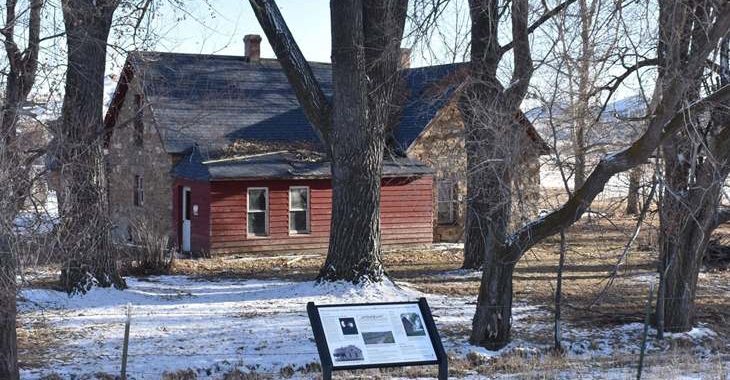
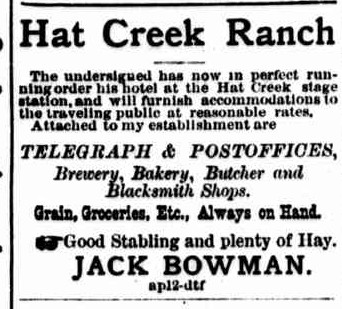
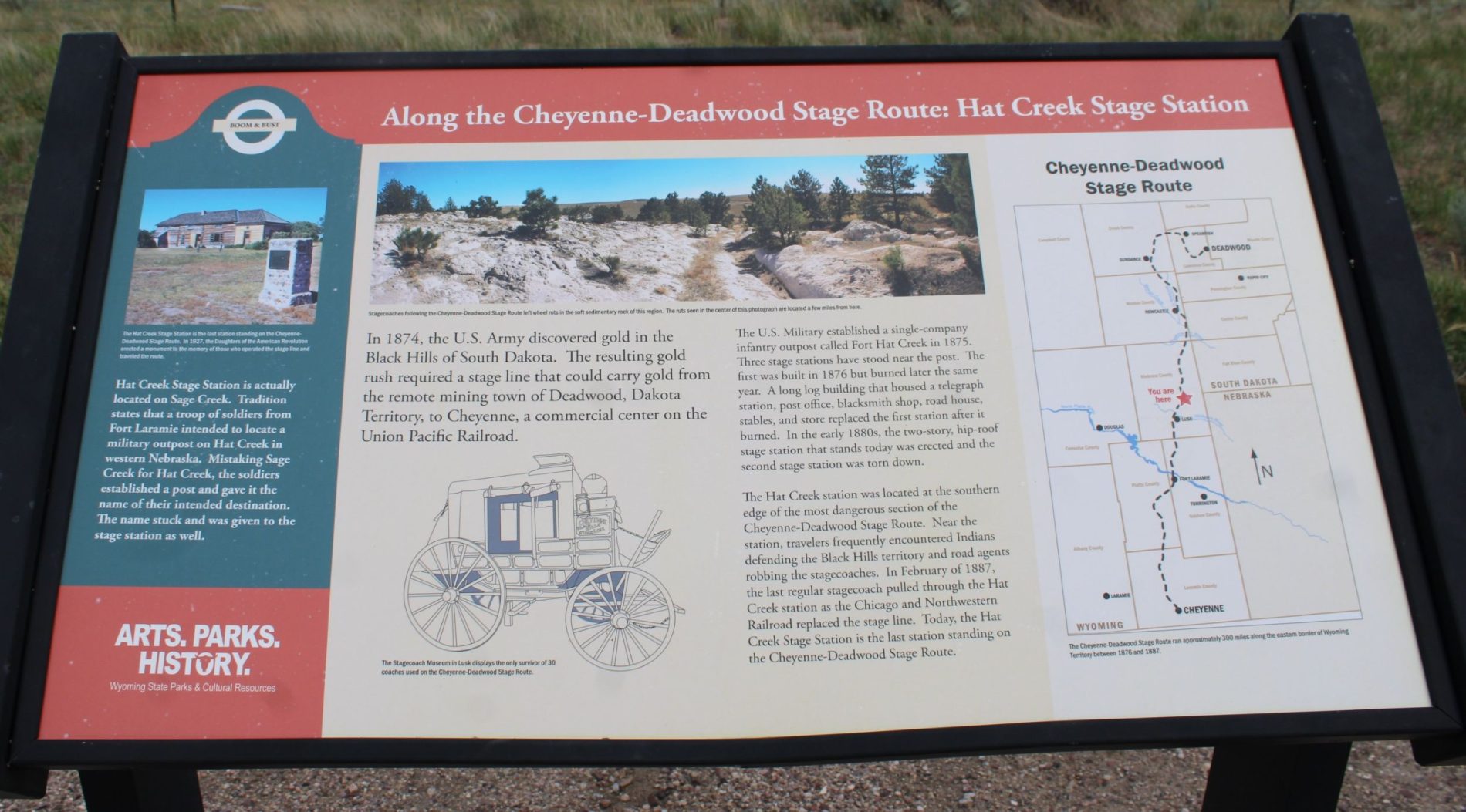
Several stage stations are still standing, and one is the Hat Creek Stage Station between Lusk and Newcastle. It was built in 1876, and then burned by the Indians a few months later. It was rebuilt, and this is an ad in the Cheyenne Daily Leader, August 22, 1877.
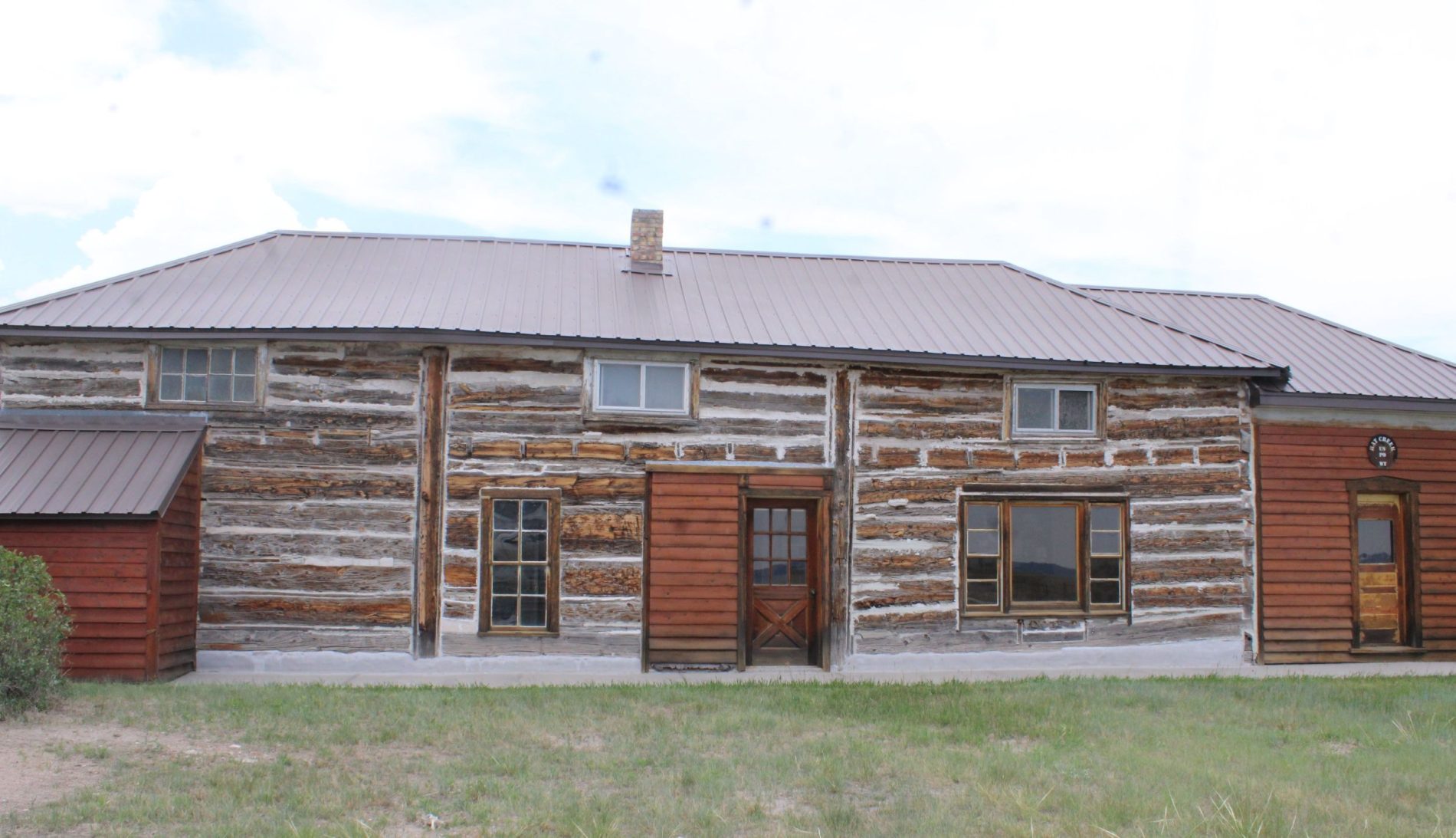
It has been through several renovations over the years, but the original part of the building is still standing.
According to information from the Stagecoach Museum in Lusk, Wyoming, Calamity Jane, Wild Bill Hickok and Buffalo Bill Cody all stopped at this stage station. In May of 1877, Crazy Horse sent a messenger into Hat Creek to announce his surrender. He and 900 people and over 2200 horses were camped a few miles north.
This from The Lusk Herald, April 22,1887 – The Cheyenne & Black Hills Stage and Express Co. Making connections at Lusk, with Wyoming Central Railway. For Chadron, Deadwood, Douglas, Buffalo and Sundance. The cheapest, quickest and shortest route from Cheyenne to all points in the Black Hills and northern Wyoming.
The U.S. Mail is carried. We have first class stations, and our division agents take all pains to secure the comfort of the passengers. Coaches leave Chugwater (the terminus of the newly built Cheyenne Northern Railroad) daily (except Sundays) on arrival of trains, arriving in Lusk two hours before train time. Coach leaves Lusk on the arrival of trains. – R. Thorp, Propr.
For stage drivers, there was a home station, where they could lay over and rest up between their routes.
At one time, according to the newspapers, there was a short-lived pony express mail service between Cheyenne and Deadwood as well, and they used the Hat Creek stage station as stop-overs as well. Letters cost $.25 per letter to mail.
Laramie Daily Sentinel, August 8, 1876 —A pony express leaves Fort Laramie every Wednesday morning for the Deadwood mines, making the trip in three days and carrying mail. Letters should be addressed via Fort Laramie and Pioneer Pony Express. Mail sent from here as early as Sunday will reach Fort Laramie in time for this mail, if later than that it will have to lay over at Fort Laramie till the following Wednesday.
Of course, there is a little Wyoming humor here from the Laramie Daily Sentinel, February 25, 1878. Light Soil – The Evanston Age says that on the road from Green River to South Pass is a stage station consisting of a log stable covered with hay. It is called ‘Starvation.’ On the door is the following table of distances. “To wood, seventy miles; to water, thirteen miles; to hell, seven inches. The soil must be very light in those parts.
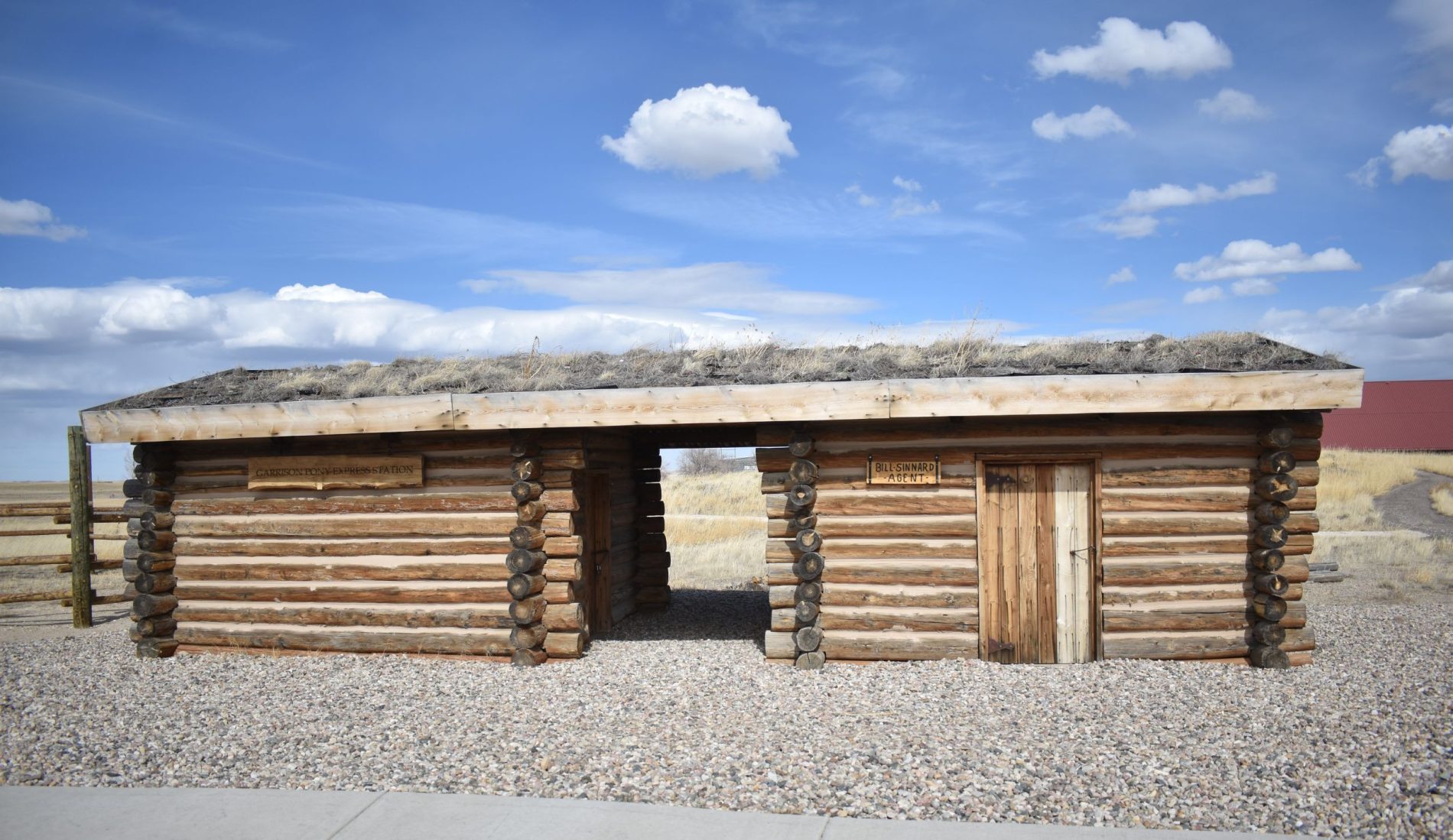
Pony Express/Stage Station at the Historic Trails Interpretive Center, Casper.
This from the Sheridan Post, January 30, 1902 which mentions the Hat Creek Station. – Col. W. F. Cody has made arrangement to present to the National museum the stage coach which was used on the Cheyenne-Deadwood stage line, from 1874 until it was wrecked and abandoned in an Indian fight at the Hat creek station in 1877 when the entire crew of drivers, and guards were killed. The kings of Belgium, Saxony, Sweden and Greece rode in it when Buffalo Bill first visited England in 1887, with his wild west show.
So, when your traveling along an interstate and stop at a modern rest area, think about the stagecoach travelers, who looked forward to the stage stop as a much-needed rest stop in the 1800s.
Featured Image, Pony Express and Stage Station at Gothenburg, Nebraska.
“}]]

More Like this



Last modified: September 7, 2026