
News – Sheridan Media
[[{“value”:”
Knowing what the weather holds each day is important. It affects travel, outdoor activities, people’s jobs. Ranchers depend on knowing if a storm is brewing and gardeners worry about the first and last frosts, and hail that can ruin crops. Bad weather, like damaging winds, tornadoes, heavy rains causing flash floods, and large hail can cause property damage, injuries and even death.
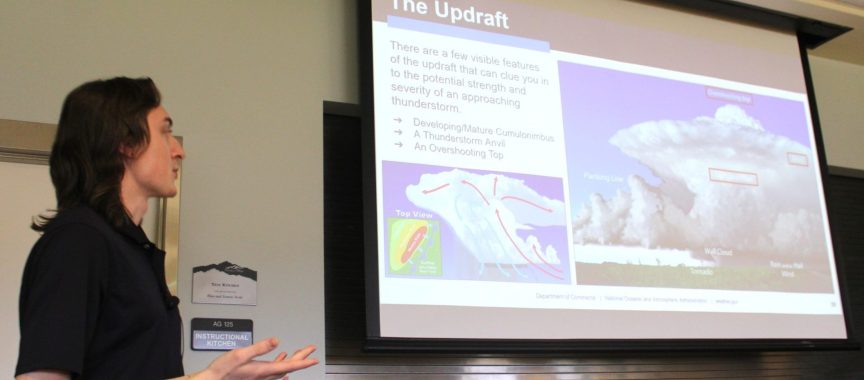
On Thursday April 30, Jesse Ludikhuize, Coordinator, Sheridan County Emergency Management, in partnership with the University of Wyoming Extension Office and the National Weather Service, (NWS) hosted a free SKYWARN Storm Spotter Training for the community.
Ludikhuize gave a brief introduction to the course and then turned the floor over to William McKeown-Robbie, and Tessa Stelzer, Meteorologists from the National Weather Service office in Billings, Montana.
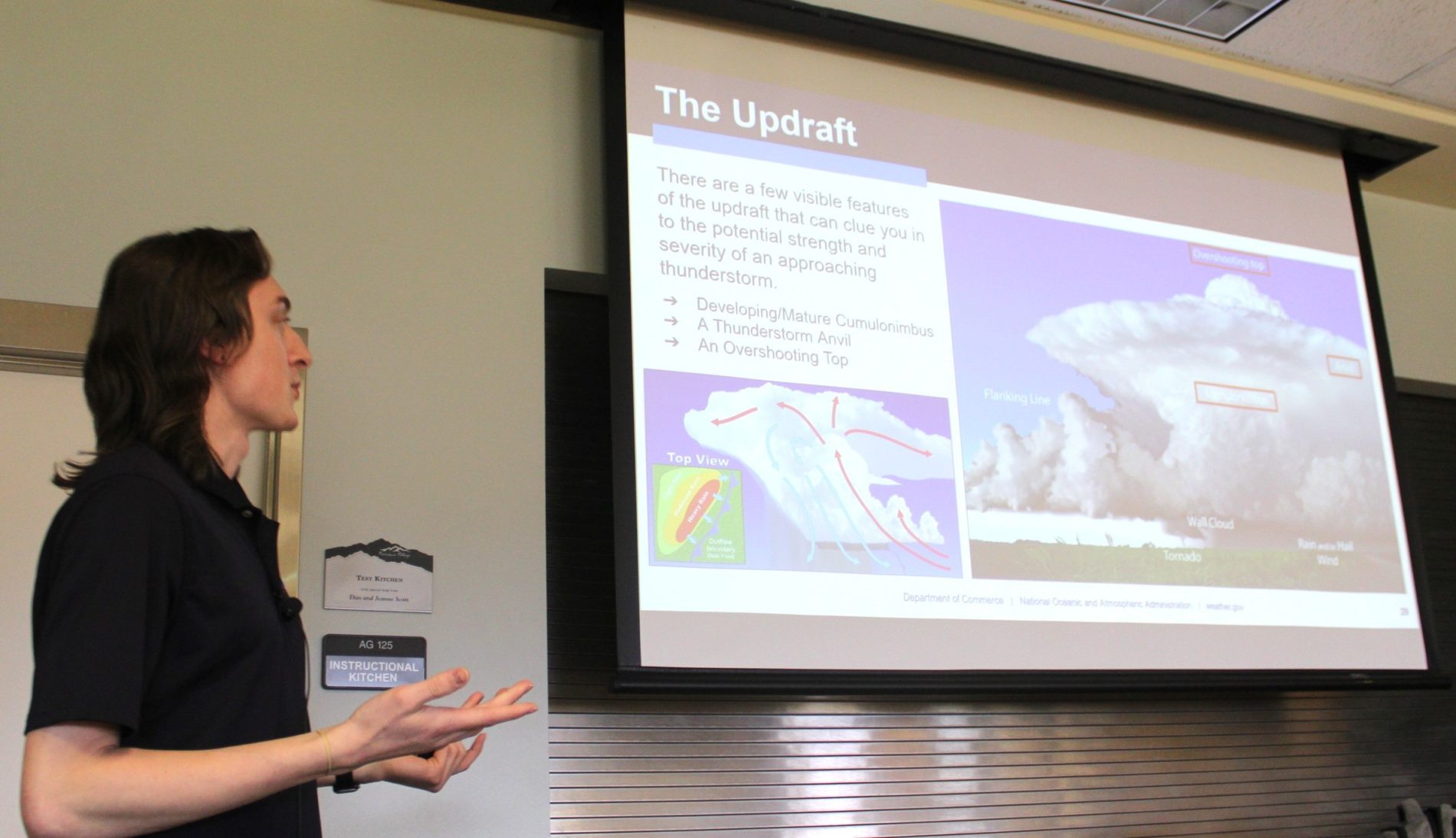
Attendees could sign up to be spotters for the NWS, and McKeown-Robbie said it was totally voluntary. Then he explained what the class was about.
He said that the Billings office is staffed 24-7, 365 days a year. “There is always at least one person watching the weather to make sure all of you are safe.”
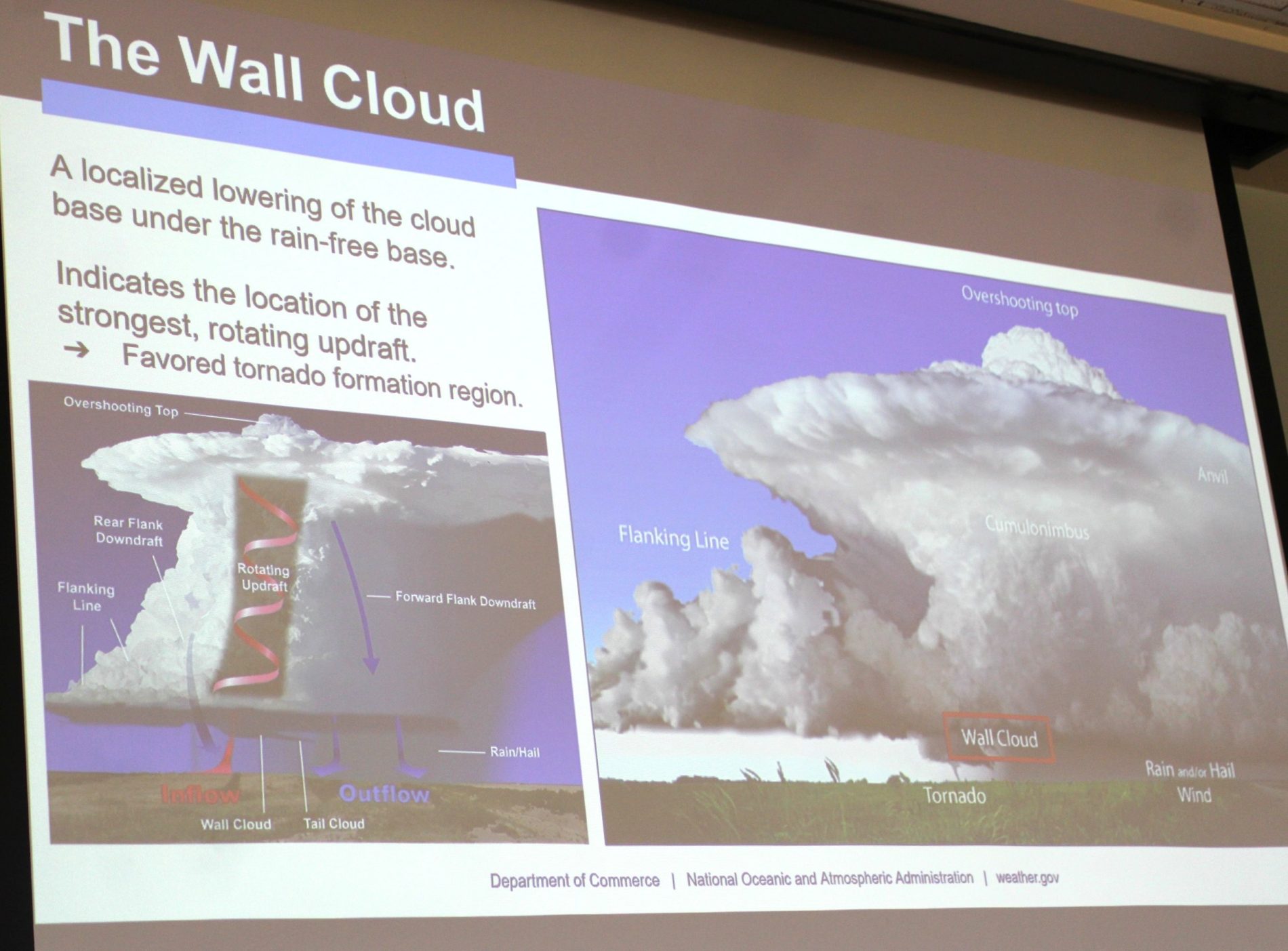
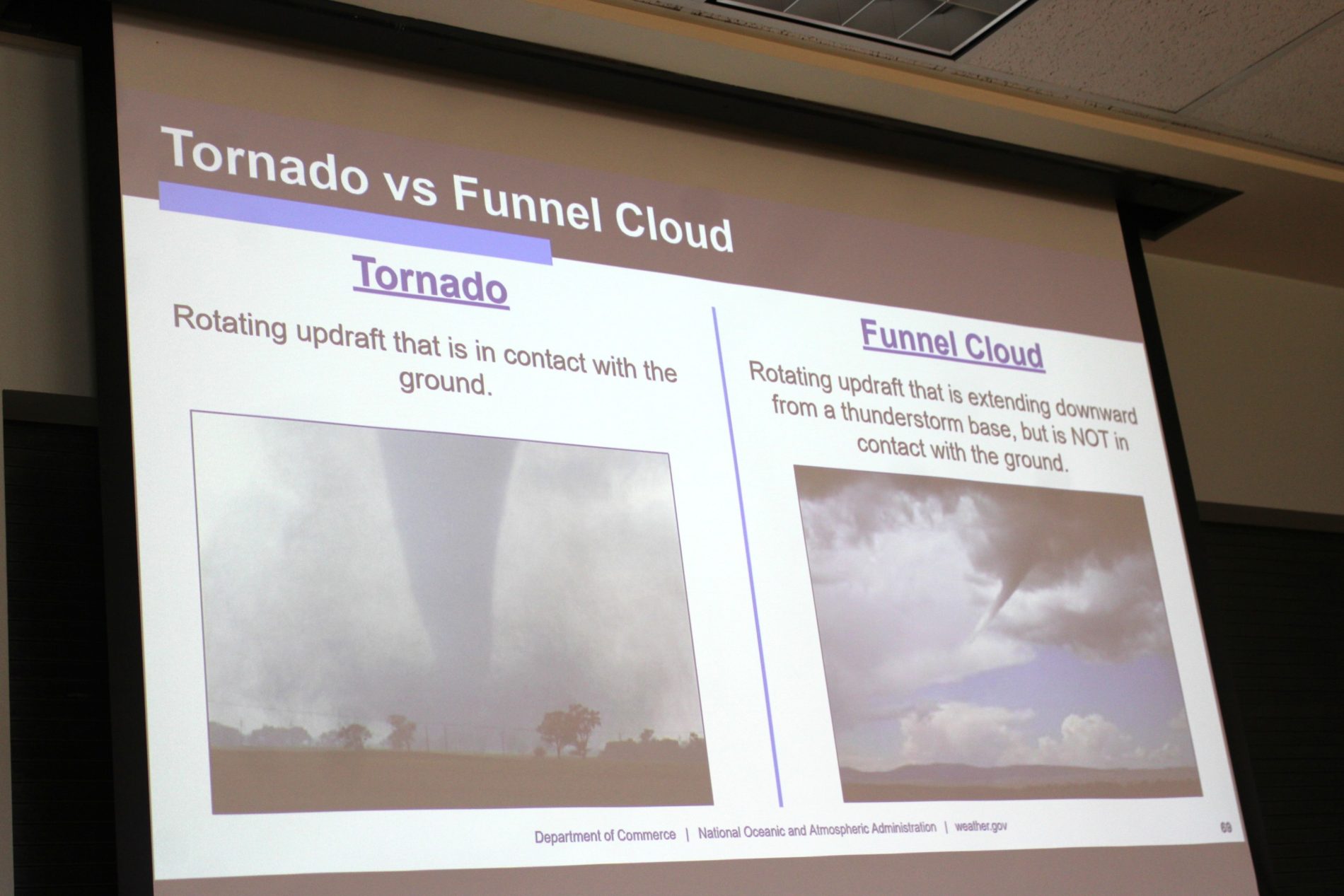
There was a slide show along with short videos showing different type of clouds that spotters had to be familiar with, funnel clouds, scud clouds, shelf clouds and anvil clouds.
He talked about the NWS Stations, which are located at airports, and they can talk to pilots in the air and have face to face communication with the weather 24-7.
There can be severe weather any month of the year, winter storms can start in September and not end until late April. During the summer, thunderstorms happen a lot in Wyoming.
There are also tornadoes, but they are not as common in the Sheridan County area as in the southern and Midwestern prairies.
After a short break, Tessa Stetzer, took over the microphone, and talked about the dangers that thunderstorms can produce. One is lightning.
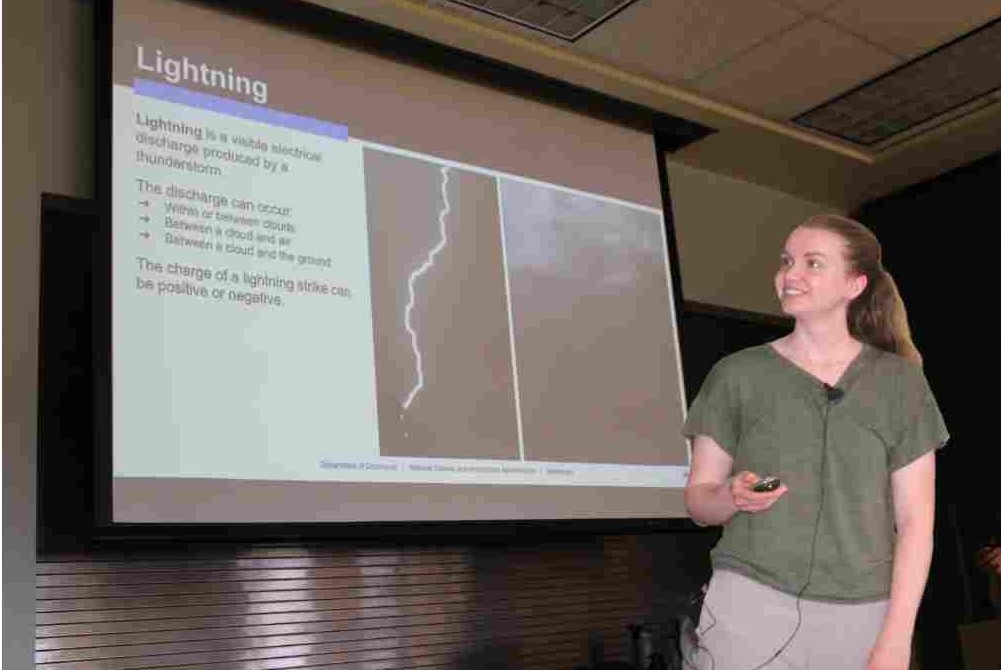
She added lightning can strike up to 20 miles away.
She also talked about hail, and how to report the size of hail stones. One way to measure them is to compare them to coins, such as nickel size, and quarter size, or compare it to golf balls or ping-pong balls. There was a slide showing the largest hail stone recorded.
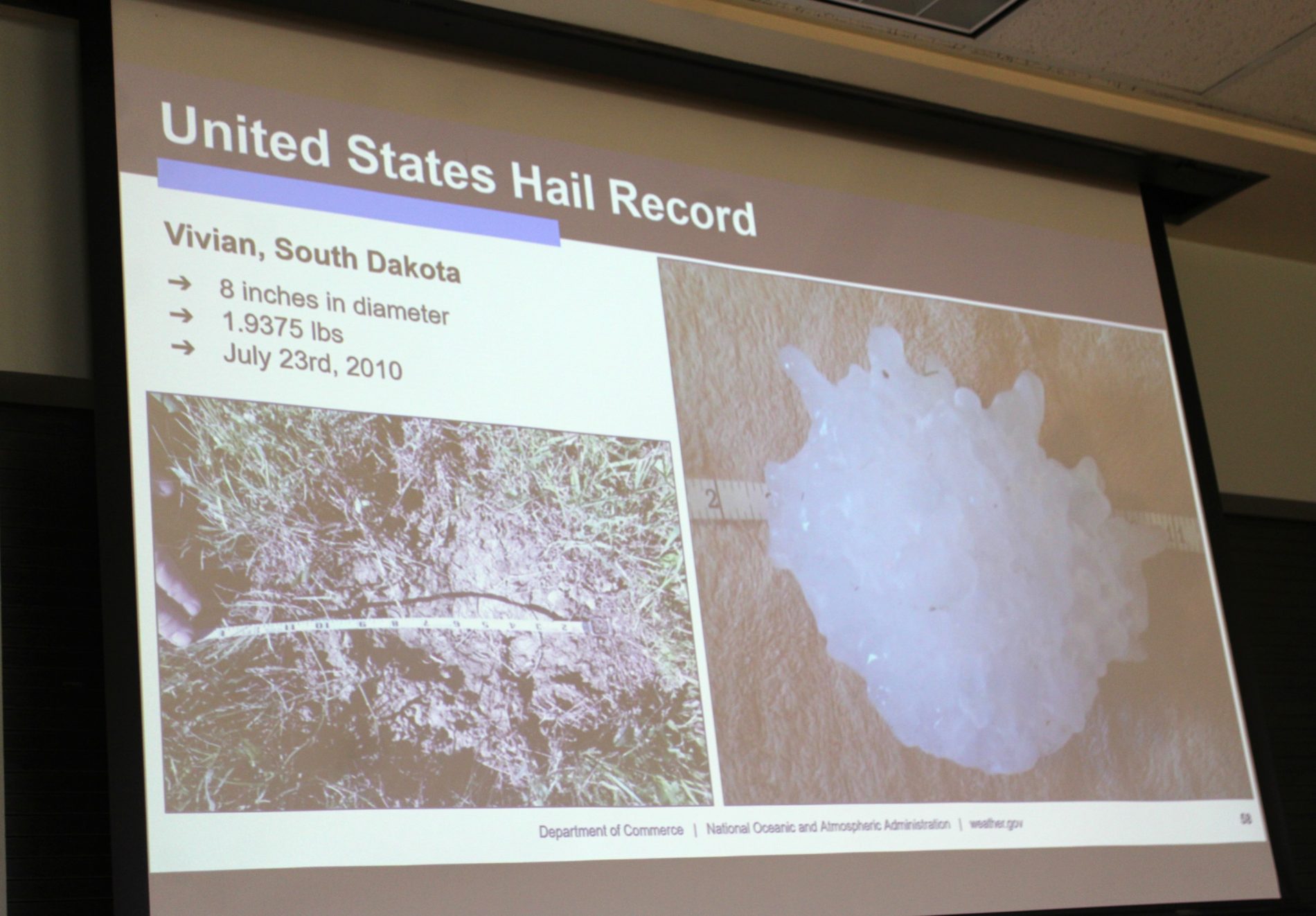
She emphasized safety, telling the spotters not to go out during a hailstorm just to measure the size of the hail stones, but wait until the storm had passed over.
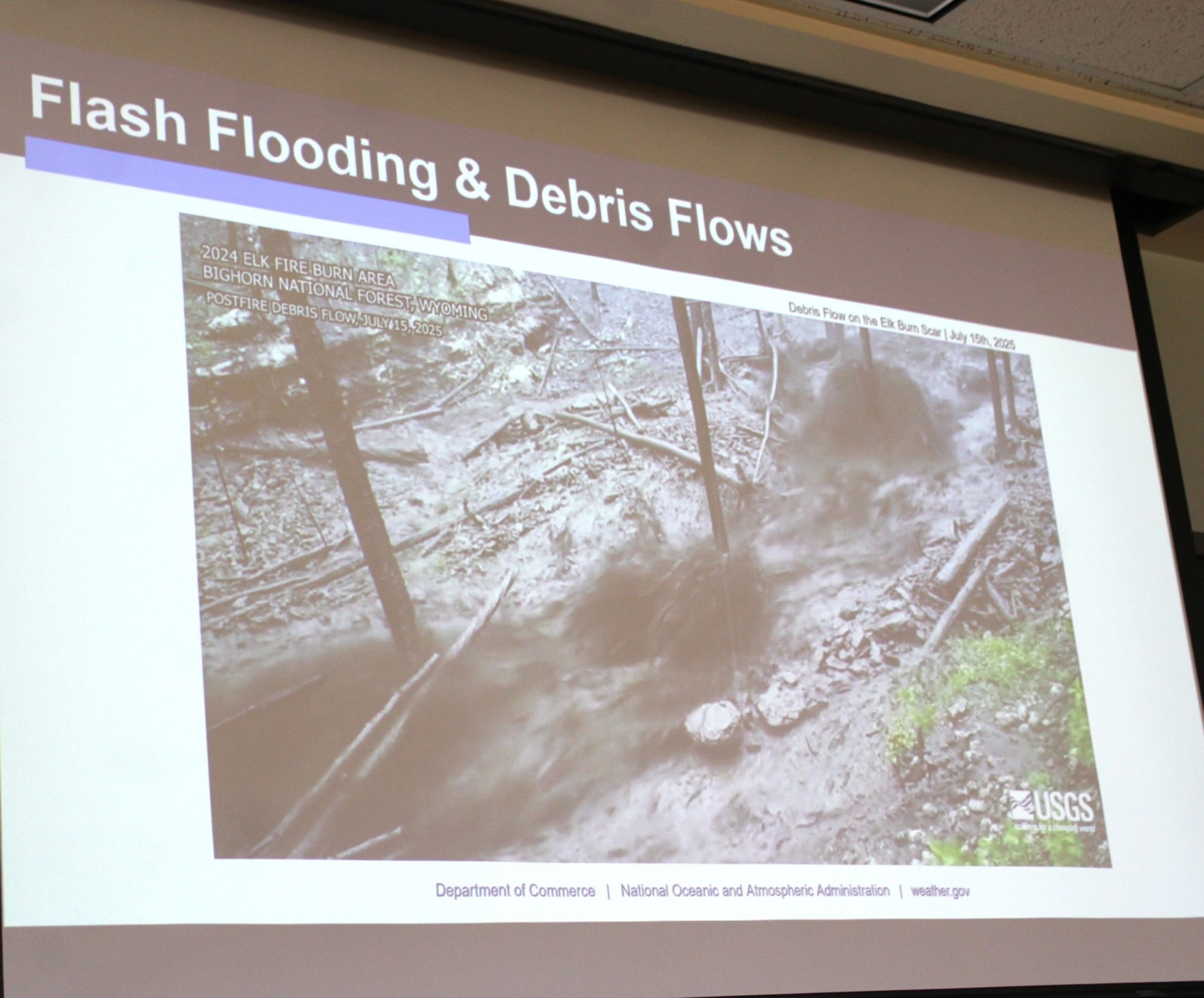
Another danger in the summer is flash floods, and especially floods that occur in debits fields after fires. There was a short video clip taken of a flash flood after the Elk Fire in 2024. There were full grown trees that had been caught in the flood and rushed down the mountain, demonstrating the power of the rushing water.
McKeown-Robbins talked about how the Billings office of the NWS is more local when it comes to reporting our weather, and gave the website for the office, adding they do not have an app at this point.
He pointed out how to interpret a forecast, and the difference between a watch and a warning of severe weather. “Weather changes very quickly,” he said.
He also told potential spotter how to report a weather event, and why spotters are important to the weather service. He talked about how weather radar works, and it’s limitations. “Radar is the most beneficial tool we have in weather forecasting,” Robbins added. “But radar can’t see through mountains.”
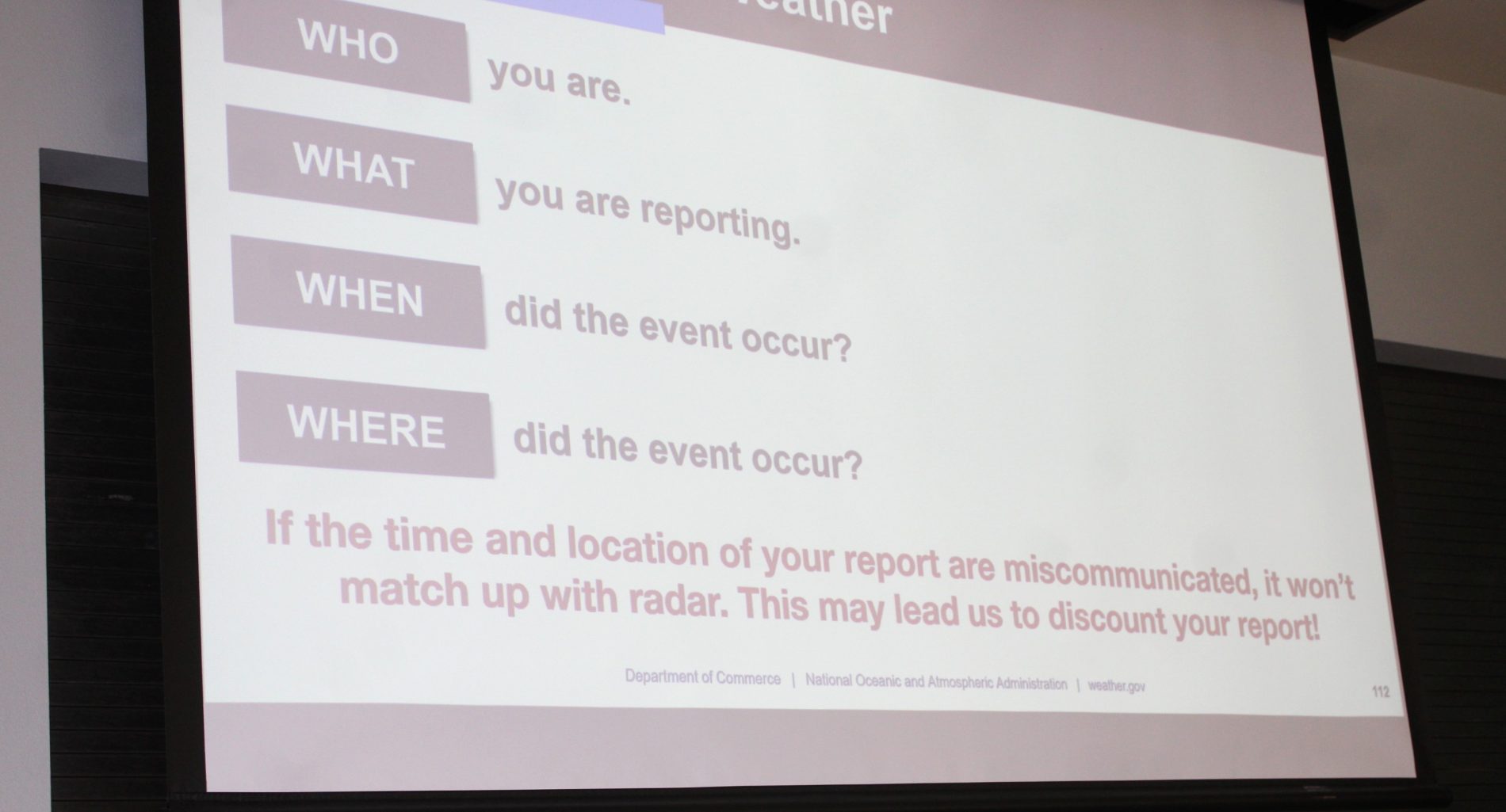
Radar has its limitations, that is why the weather service depends on trained spotters, especially Wyoming and Montana’s rural areas.
This two-hour course was illustrated with several slides and provided participants with the knowledge and skills needed to identify and report severe weather.
“}]]

More Like this




Last modified: May 3, 2026