
News – Sheridan Media
[[{“value”:”
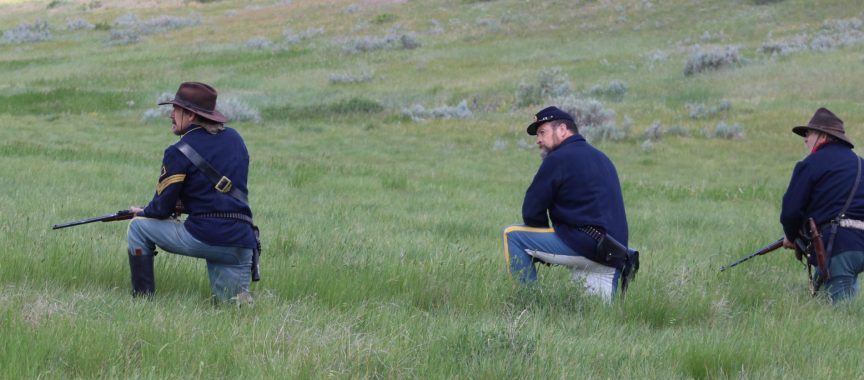
When one thinks of the army during the Plains Indian Wars, they tend to think of the Cavalry. Romantic images of soldiers galloping into the fray, sabers flashing, is a staple in Western movies. But the infantry also played their part in the Indian wars.
However, on the western plains, against a mounted foe, wasn’t as efficient as they were in many of our nations wars. Here are some interesting stories about the Infantry on the plains during the 1800s.
As we see in this story, the infantry often accompanied the survey crews who were mapping the west.
The Cheyenne Daily Sun, August 15, 1877 – Capt. Stanton U.S.A.,the Chief Engineer of the Department of the Platte, accompanied by Lieutenant Witzler and forty infantrymen, is camped on the Cheyenne road about two miles from Deadwood. He is surveying this country for the purpose of mapping the same and will shortly locate Deadwood, Custer and Crook City, by astronomical observation. He will leave in a few days for Fort Reno, surveying the country and measuring the road as he goes. —The Laramie Sentinel
General Phil Sheridan fought in the Civil War, and was familiar with the infantry during that time, but he realized that they weren’t as effectual here.
Cheyenne Daily Leader, October 11, 1873 – General Phil Sheridan and staff returned to Cheyenne yesterday from a flying visit to Forts Laramie and Fetterman and proceeded on hisway to Chicago. The General has personally investigated the Indian situation on our frontier, and we are informed that he will if not interfered with by higher authorities, inaugurate measures that will in the future prevent that straying of the Sioux beyond the boundary lines of their hunting grounds.
We understand that he declines to accede to the request of the Indian Department, to station two companies of Infantry from the Red Cloud Agency, for the purpose of keeping the Indians within bounds. We are inclined to think that, should the presence of a military force become necessary at the Agency, a few regiments of Cavalry will be ordered there. Gen. Phil, does not propose to send a few Infantrymen to be slaughtered by the red man.
Army issue clothing was not always the most comfortable, as in this article about army boots. in the Rawlins Semi-Weekly Republican, May 6, 1899 – English Army Boots So Bad That They Are Called a Torture. – It costs $750 to make an efficient soldier and another 250 a year as to keep him in good going condition, by the time Tommy Atkins (British slang word for Soldier) is thoroughly broken in he may be worth anything up to 5,000 or 6,000 by the end of his seven years’ service. The weakest part of Tommy Atkins is his feet his feet. And pretty well 90 per cent of the cases in which soldiers have had to fall sick or fall out are dim to the perennial trouble between the army boot and the army foot. The Salisbury plain maneuvers set the seal on this fact and all other measures having failed, the authorities have now decided to make Private Atkins his own chiropodist.
First of all, half a dozen officers of ‘ the army medical corps have been trained at Aldershot in chiropody, and they In turn will proceed to impart the whole aura and mystery of be responsible for the treatment of all cases of “feet” In their reglment3. Each of the lectures will be accompanied by practical demonstrations by a professional chiropodist. From interviews with those In authority a reporter was enabled to obtain the main points of indictment against the present army boot as issued by tht war office. It is a machine-sewn article to all Iinfantry regiments except those of the Highland brigades, which is hand-sewn shoes, and the difference is most marked. One great fault m the army boot is that it is not straight enough on the inner side. The toe of the boot is decidedly pointed, and as a result the men’s toes are cramped, while there is no give or spring in the boot; the soles and uppers are far too stiff, and the tendons of the foot are not used, consequently the foot cramps and the man falls out or, if he perseveres, does himself serious injury. All these things will no doubt be fully dealt with at the forthcoming lectures and valuable information acquired, which, if acted upon, must be beneficial to all concerned.— London Leader.
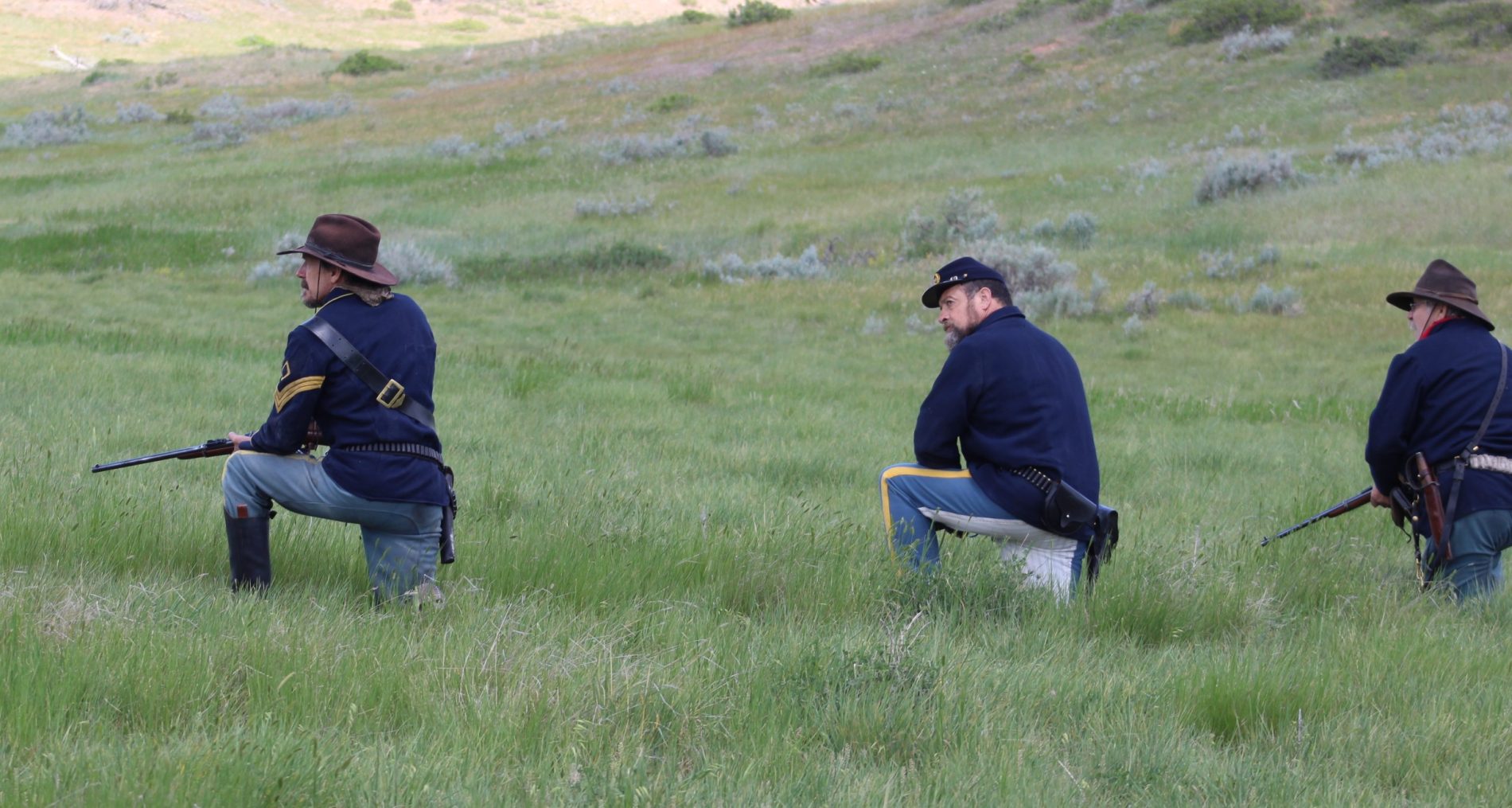
Although the western plains of America are a long way from England, the hobnail army boots were not much better than those described in the above story. The Fort Phil Kearny Frontier Regulars, in one of their programs about the army, said that the boots had slick soles, which made walking on the slick grass or in snow difficult. The boots were not made to be for a left or a right foot, which would make them uncomfortable.
To help the soldiers keep their feet dry and in good health, there was foot powder.
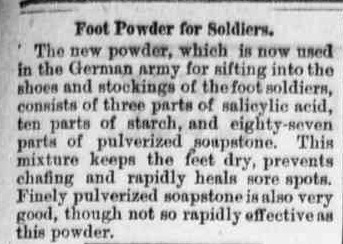
Bill Barlow’s Budget, March 13, 1889
Of course, there was some rivalry between the various arms of the service, the west was probably no different.
The Sundance Gazette, August 12, 1892 – Rival Jokers -The jealousy which almost always exists between different arms of the military service used to be illustrated by the dialogues which took place between cavalrymen and infantrymen during the Civil War. It was a favorite and brutal joke on the part of the cavalrymen, who all acted to despise the foot soldiers to shout to some soldiers as the cavalry were passing the infantry on the march: “Are you tired of walking?” Whereupon, if the infantrymen, sup posing that he was going to get a lift, responded “Yes!” the cavalrymen wmid say, ”Well, try running a while!”
The infantrymen, for their part, ridiculed the cavalrymen unmercifully when they were in the camp, where the cavalrymen were compelled to spend much of their time in acting as body servants to their horses. A cavalryman was one day engaged in laboriously “cleaning-down” his rather rawboned steed. An Infantryman sauntered up, andwith his hands behind his back, leisurely inspected the operation.
“Hullo, John!” said the cavalry man. “Think you’d like to be in the cavalry?”
“Oh yes,” said the infantryman; “But only as a horse!“

The infantry, an often-neglected part of the history of the Army on the Western Plains, but an important part of the opening of the west.
“}]]

More Like this

Last modified: June 29, 2026