
News – Sheridan Media
[[{“value”:”
March and April seem to be the months for creeks to rise and sometimes flood. Snow melt off the mountains raise the water levels, and often ice jams cause flooding by blocking the creek channels.
Being built at the confluence of Big and Little Goose Creeks, the town of Sheridan was often subjected to major floods. Here are a few of them.
One of the earliest floods reported in Sheridan was in 1899, and it was a major flood event. Founded in 1882, Sheridan was only 17 years old when this flood occurred.
This from The Sheridan Post, April 13, 1899 – High Water and Vanished Bridges. The warm weather has raised havoc with the snow drifts and from huge masses of snow has come a thousand rivulets that when united have filled our streams to overflowing. Last Sunday morning the water commenced to rise and by night both Little and Big Goose creeks were raging torrents. Ice gorged above nearly every bridge and a force of men were kept busy trying to save them. Monday morning The ice had formed a gorge above the railroad and Broadway bridges and had done considerable damage to the railroad truck making it unsafe for traffic and flooding all the territory between Alger avenue and the creek.
The Willard hotel had about 14 inches of water spread evenly over the floor and sections of side-walks were found floating in out-of-the-way places and a gang of men were using giant powder at the ice gorge to relieve the strain on the bridges. The Broadway bridge was quickly torn up by Marshal Shroff and his men who were ably assisted by some of the B. & M. boys. It took a good many shots to loosen the huge pieces of ice but it was finally accomplished and it rushed down to the Main street bridge where a large crowd had gathered to witness the jam as it passed by. The starting of the jam on the Broadway bridge caused the jam at the railroad bridge to move and the great mass striking the Main street bridge soon broke it in two pieces and carried it down to the Fifth Avenue bridge where, it joined the already huge mass of ice which needed only the slightest jar to start it.
Below the Fifth Avenue bridge another jam had formed but a single shot started the whole mass on its journey to Tongue river. In less than two minutes after the starting of the lower jam, the jam at the bridge started and carried the bridge with it and landed it with the Main street bridge on an island near the slaughter house of the Sheridan Meat Co.
The last bridge carried the city pipeline, and the residents of Neilson Heights will have no use for their hydrants for some time to come. The bridges that lead to Prairie Dog near the Brooks ranch are both gone and the city and county will be heavy losers. It has been demonstrated that nothing but a truss bridge stands any show of standing the spring freshets and no doubt our city council will govern themselves accordingly.
This story about the 1924 flood, mentions some methods used to break up the ice jams which blocked the creek.
Sheridan Post-Enterprise, February 14, 1924 – Big and Little Goose Creeks Swollen by Melting of Snow. Sheridan faced a repetition of damaging September 1923, flood during the 24 hours which ended at noon Thursday. Both Big and Little Goose creeks, swollen during Wednesday by melting snow and obstructed by ice, threatened during Wednesday night and early Thursday to inundate a portion of the city. The crisis was safely passed, however, through dynamiting the ice jams by a crew of men working under A. MacCarty, city commissioner.
After the crew had patrolled Little Goose and Big Goose creeks within the city limits and battled ice jams throughout the night, it was announced by Mr. MacCarty at noon Thursday that the flood danger to Sheridan had lessened, due to colder weather, which had stopped the melting of snow and brought about a lowering of the water in the streams.
High Mark at 2 a. m. – The high mark was reached at 2 a. m. Thursday, it was reported by members of the night crew, when it is believed that another raise of from four to six inches would have flooded the entire northern end of the city. The water began to recede during the early morning hours, Mr. MacCarty said, adding that it had lowered about eight inches by 11 a. m. Thursday. However, crews of men were still working in an effort to keep the streams clear of ice jams.
Warm Weather Dangerous – If colder weather had not arrived Wednesday night there would have been a serious over-flow Thursday morning, it was believed, city officials stating that another warm spell at present would also bring a flood, as there is a large quantity of ice in the streams. The ice, floating in large cakes, jams easily and is too bulky to pass quickly down the stream.
Efforts were begun Wednesday afternoon to clear away the worst jams, when dynamite was used to break up the ice in Big Goose creek near Third street. The ice condition is still serious in Big Goose creek, although ice is virtually cleared away in Little Goose creek.
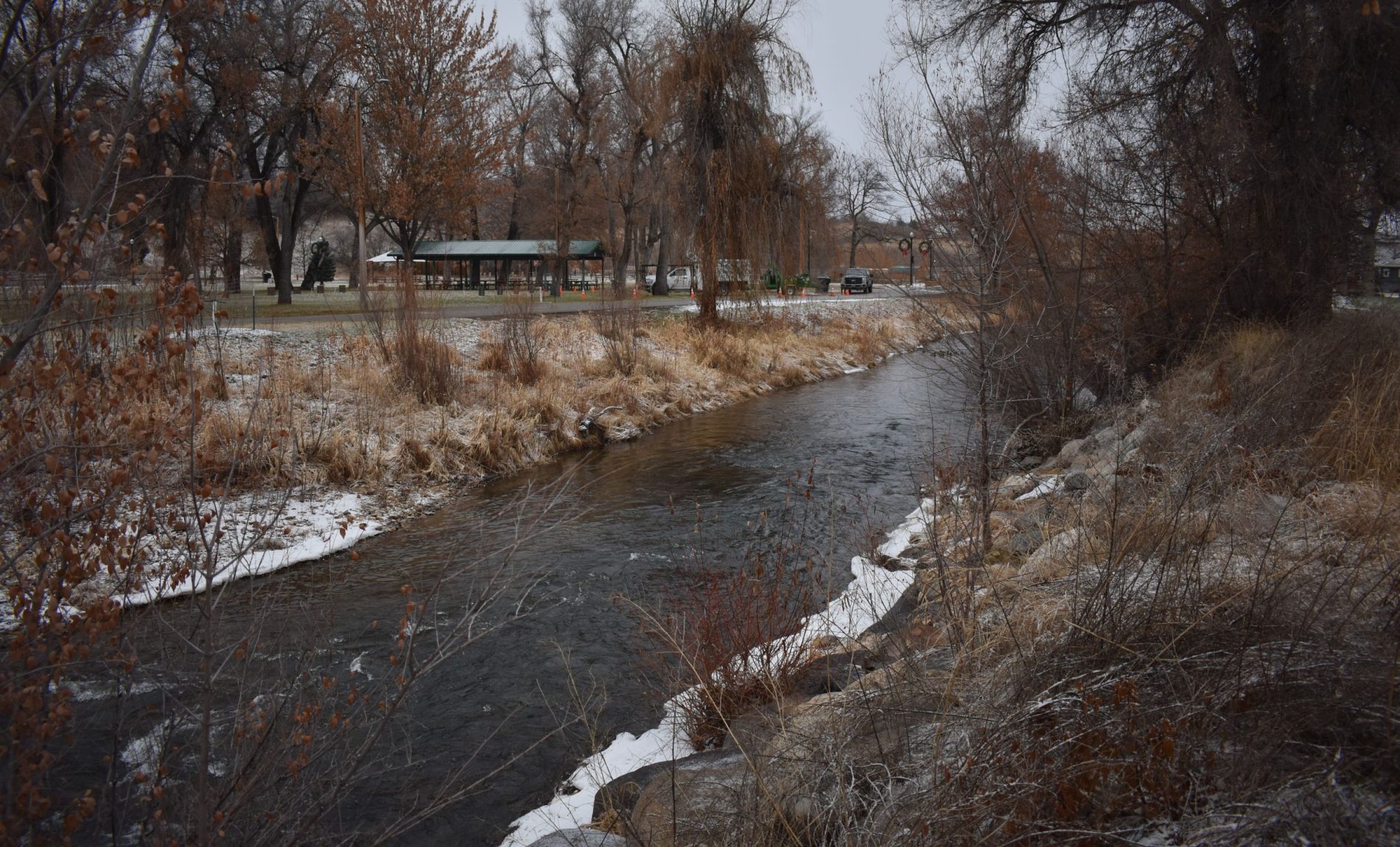
Banks Overflowed – Some sections of Pioneer park and a few points along the creek banks were the only places where the water actually overflowed the banks during the high water of Wednesday afternoon and night, it was declared after a thorough inspection by city officials. If changeable weather continues, in the opinion of Mr. MacCarty, the ice will melt and there will be no danger of a flood in Sheridan this year. That was the condition prevailing here last year. That rivers in the vicinity of Sheridan were rising rapidly during Wednesday night, were the reports reaching here Thursday.
Water in Powder river was running over the ice, which is nearly two feet in thickness in places, it was reported at Burlington headquarters, and men are watching the river closely in order to protect the bridge in construction across the river at Arvada. A bridge at that point was destroyed by the September flood.
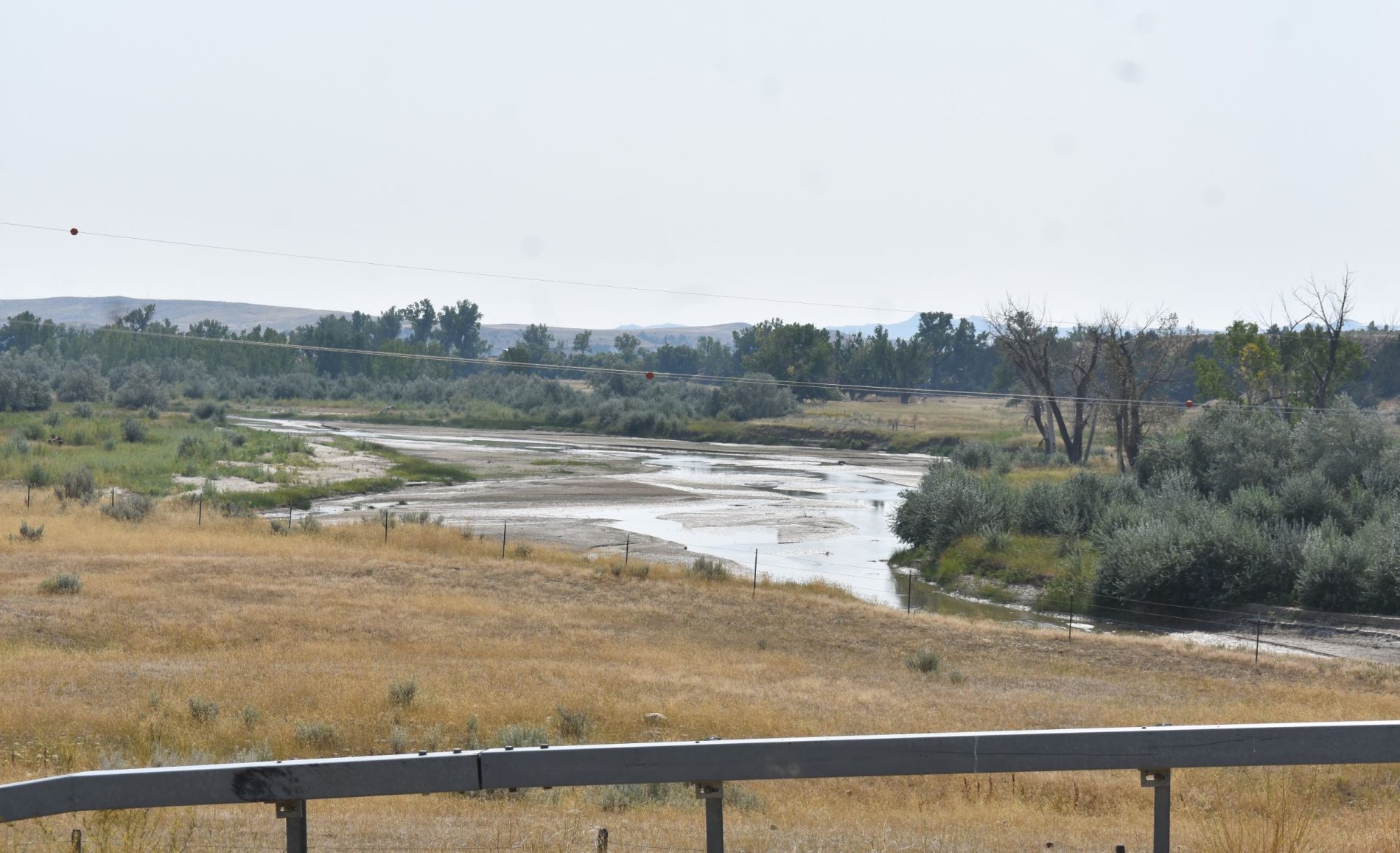
Powder River flooded many times as well. The Newcastle News, April 3, 1891 – reported this flood. Parties going northat this time should read thenews. Buffalo Bulletin: The Powder river has been rising for ten days, and there is no crossing it between Buffalo and Douglas except by means of boats. Passengers, mail and express packages are ferried across on skiffs. No mail arrived in this city from the south from Sunday to Wednesday morning. The stage which left Powder river at 10 o’clock on the morning of last Monday did not reach Buffalo until yesterday. A. F. Washington says the snow on the divide is more than waist high. He also states that the river is full of floating ice, making crossing in the boat very dangerous and laborious work. Four hours were consumed Monday in crossing passengers, mail and baggage for the north-bound stage.
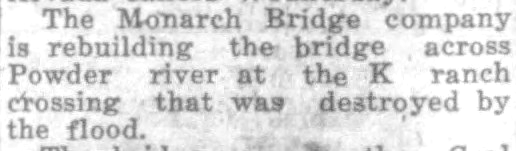
Sheridan Post-Enterprise, November 15, 1923
(The story of the 1923 Arvada Flood was posted on Sheridan Media on September 30, 2023)
To protect the town from the flood waters, in 1963 the US Army Corps of Engineers undertook a flood control project, which changed the nature of the creeks and made the town safer from floods. The town continues to monitor the creek and the flood control structures to keep the town safe.
“}]]

More Like this




Last modified: April 6, 2026